

A Timeline of Nepal · Powered by belayat.uk
A Timeline of Nepal
About 2,700 years of Nepali history, from the Kirat kings of the Kathmandu Valley to the Gen Z uprising and the floods of 2026: what happened, when, and why it still matters.
- 65 events
- 5 eras
- 700 BCE to 2026
- Every entry sourced
Ancient Nepal
From the Kirat kings of the chronicles to the Licchavi inscriptions and the Thakuri centuries. Much of the early period is known from tradition and later chronicles rather than records of the time.
- 700 BCEc. 700 – 300 BCE
The Kirat kingdom
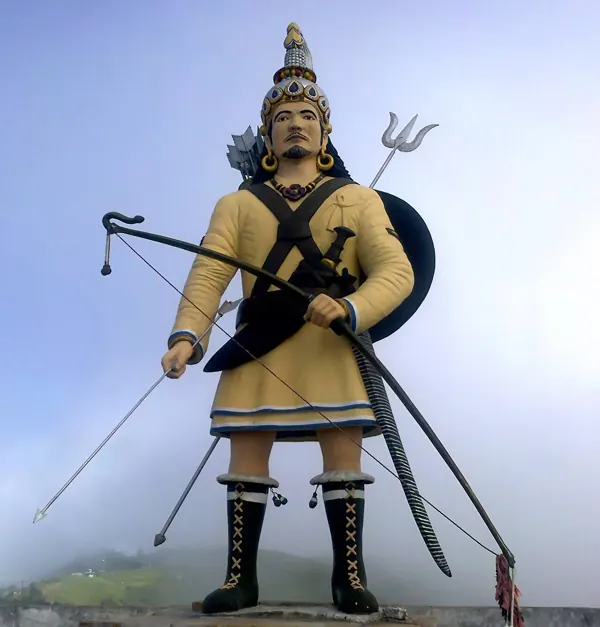
The Kirats are the earliest rulers named in the chronicles of the Kathmandu Valley, traditionally beginning around the seventh century BCE with the legendary king Yalamber.
Read more
The Nepali chronicles list a long line of Kirat kings, though their dates and even their number vary from one source to another, and almost nothing about the period can be confirmed from inscriptions. What is better attested is that Kirat peoples — the ancestors of today's Rai, Limbu and Sunuwar communities among others — were long established in the eastern hills, and that their descendants still mark this history in festivals such as Sakela and Udhauli-Ubhauli. Historians treat the chronicle king-lists as tradition rather than record, but the Kirat era remains the foundation story of Nepal's own account of itself, and Yalamber appears in the Mahabharata tradition as Barbarik. The period is generally taken to close when the Licchavis established themselves in the valley.
- 563 BCEc. 563 – 483 BCE
The Buddha is born at Lumbini
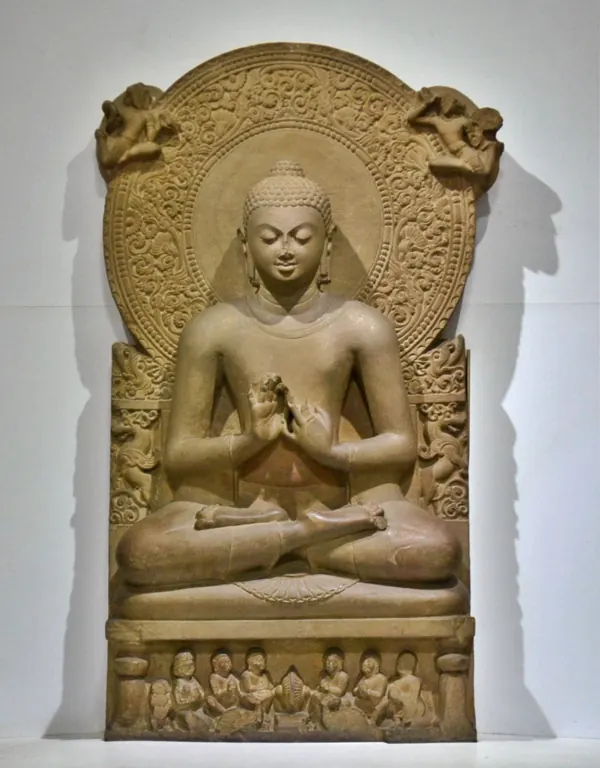
Siddhartha Gautama, later known as the Buddha, was born according to Buddhist tradition at Lumbini in the Terai, in what is now Rupandehi district, to a family of the Shakya clan.
Read more
He renounced his household life to live as a wandering ascetic, and after years of mendicancy and meditation attained enlightenment at Bodh Gaya, in present-day India. The religion he founded spread across Asia and became one of the defining influences on Nepali culture, art and architecture. His dates are debated: the traditional reckoning of about 563 to 483 BCE is still widely used, while many modern scholars place his death closer to 400 BCE. Lumbini is today a UNESCO World Heritage Site and one of the four principal pilgrimage places of Buddhism, and the Buddha's birth in Nepal remains a point of national pride, occasionally the subject of public argument with neighbours who claim him as their own.
- 249 BCEc. 249 BCE
Ashoka's pillar marks the birthplace
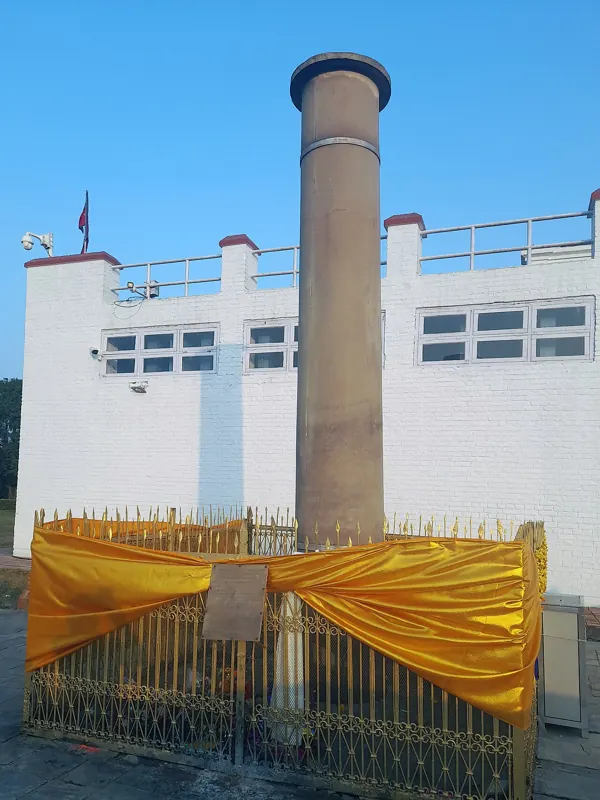
The Mauryan emperor Ashoka is recorded as having travelled to Lumbini in the twentieth year after his consecration, a date usually placed at about 249 BCE. To mark the visit he had a polished sandstone pillar erected.
Read more
Its Brahmi inscription, still legible, states that the emperor came in person and worshipped at the spot because the Buddha Shakyamuni was born there, and that he reduced the village's tax obligations in recognition. It is the earliest surviving written evidence identifying Lumbini as the Buddha's birthplace, and among the oldest inscriptions connected with the territory of modern Nepal. The site was later lost to memory and rediscovered in December 1896, when the governor Khadga Shumsher Rana and the archaeologist Alois Anton Führer examined a pillar standing in a mound at Rummindei and found Ashoka's inscription on it. Excavations beneath the Maya Devi temple in 2013 found earlier shrine structures, suggesting worship at the site from a very early date.
- 350c. 350 – 375 CE
Nepal named on the Allahabad pillar
The Allahabad Pillar inscription of the Gupta emperor Samudragupta lists the frontier kingdoms that paid him tribute and sent envoys to his court.
Read more
Among them, in lines 22 to 23, is Nepala — alongside Samatata, Davaka, Kamarupa and Kartripura. It is one of the earliest external references to Nepal by name, and it places the Kathmandu Valley within the diplomatic world of northern India in the fourth century. The inscription describes these as frontier rulers rather than conquered provinces: they paid tribute and made obeisance, but were not absorbed into the empire. For historians, the value of the reference is that it fixes Nepal as a recognised political entity at a date when the local chronicles are still largely legendary. Within a century the Licchavi kings of the valley would begin issuing dated inscriptions of their own, and Nepal's history moves from tradition into documentary record.
- 400c. 400 – 750 CE
The Licchavi era and Nepal's first records
The Licchavi kings ruled the Kathmandu Valley for roughly three and a half centuries, and their reign marks the point at which Nepal's history moves from chronicle into documentary record.
Read more
A stone pillar at the Changu Narayan temple, dated 464 CE and issued in the name of King Manadeva, is generally accepted as the earliest securely dated inscription found in Nepal. Dozens more followed, recording land grants, taxes, guilds, irrigation and the administration of villages. The period's high point is usually associated with Amshuverma, who governed in the early seventh century, built the palace of Kailashkut Bhawan and expanded trade and diplomatic contact with Tibet, India and China. Tibetan tradition holds that a Nepali princess, Bhrikuti, married King Songtsen Gampo and helped carry Buddhism north, though no Nepali source of the period mentions her and historians treat the story with caution. Newar artisans nonetheless worked in Tibet for centuries afterwards.
- 750c. 750 – 1200
The Thakuri period
The centuries between the end of Licchavi rule and the rise of the Mallas are the least documented in Nepal's recorded history, and are usually labelled the Thakuri period after the ruling families said to have held power from Nuwakot and the Kathmandu Valley.
Read more
Inscriptions become scarce, and much of what is written about the era comes from later chronicles of uncertain reliability; some historians question whether the Thakuris constituted a single dynasty at all. The tradition holds that Amshuverma's line gave way to Thakuri rulers, among them Gunakamadeva, credited in the chronicles with founding the city of Kantipur, now Kathmandu. Trade across the Himalaya continued, Buddhist and Hindu institutions were endowed, and the Newar craft traditions that would flower under the Mallas were already being formed. It is a genuine gap in the record rather than a gap in Nepali life, and historians remain cautious about the names and dates handed down for it.
- 10971097 – 1324
The Karnat kings of Mithila
The Karnat or Karnata dynasty was established in 1097 CE by Nanyadeva, with capitals at Simraungadh in what is now Bara district of Nepal and, later, at Darbhanga in Bihar.
Read more
Its territory covered Tirhut or Mithila, bounded by the Mahananda river in the east, the Ganges in the south, the Gandaki in the west and the Himalaya to the north. Under the Karnats, Mithila enjoyed near-complete sovereignty for more than two centuries, and the period is associated with a flowering of Maithili language, literature and Sanskrit scholarship, as well as the Tirhuta script in which its inscriptions were cut. The dynasty fell in 1324 to the forces of Ghiyasuddin Tughlaq of Delhi, and its last ruler Harisimhadeva fled north into the hills. The Karnat period is a reminder that the history of the Nepali plains has its own long trajectory, distinct from that of the Kathmandu Valley, and it remains central to Madhesi and Maithil accounts of the region's past.
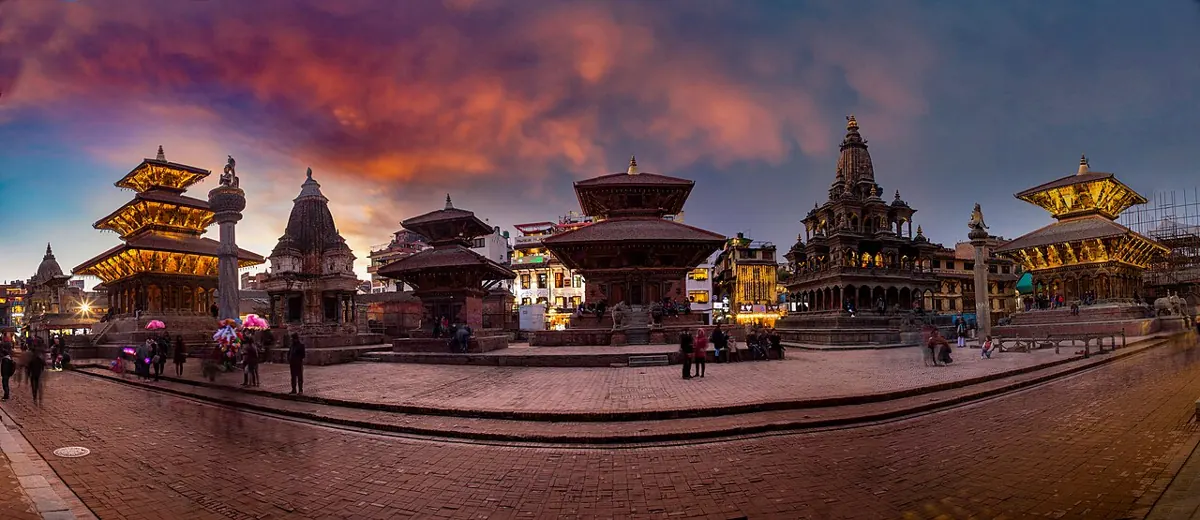
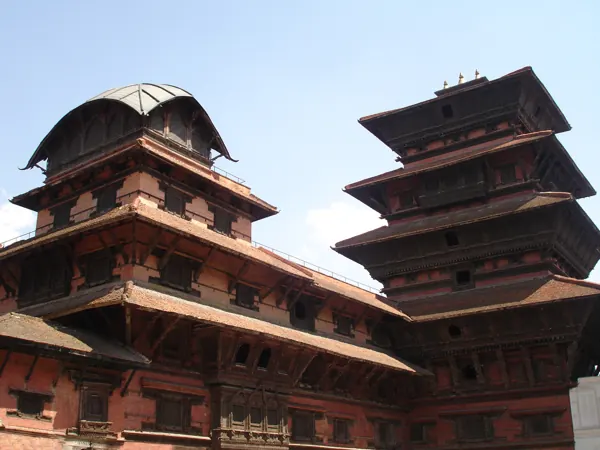
Patan Durbar Square at dusk: the palace square of the Malla kings of Lalitpur. Image: Wikimedia Commons, Mithunkunwar9, CC BY-SA 4.0
The Malla era
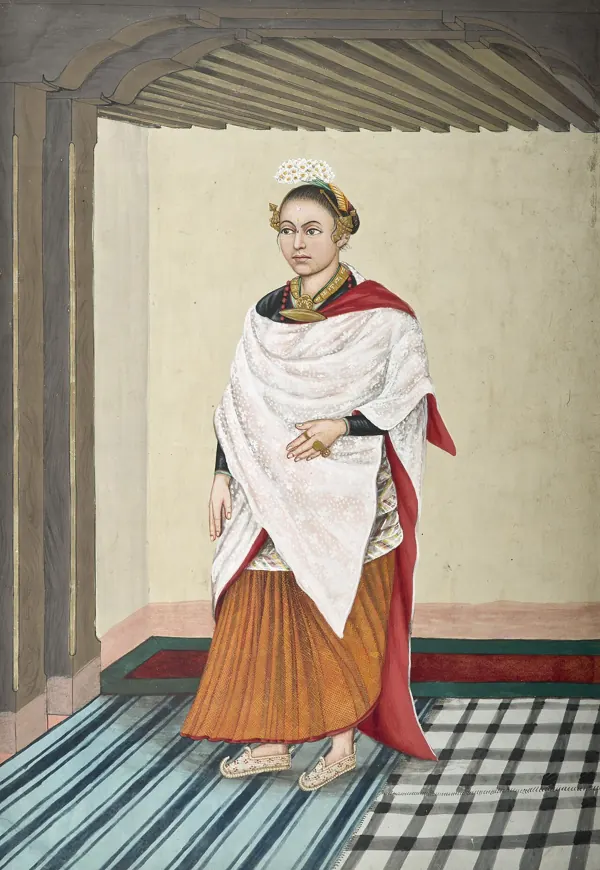
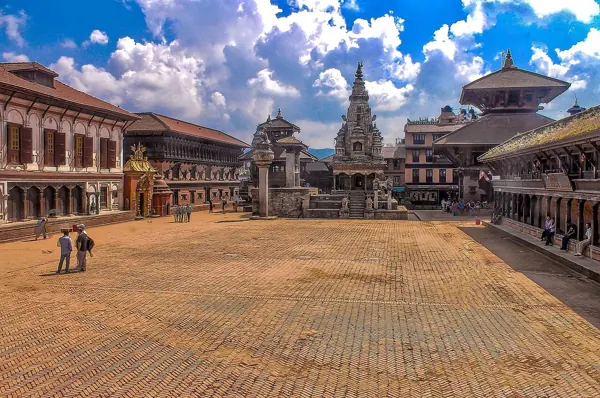
For more than five centuries the Malla kings ruled the Kathmandu Valley, from 1482 as three rival kingdoms: Kantipur (Kathmandu), Lalitpur (Patan) and Bhaktapur. Nepal Bhasa was the language of their courts and Nepal Sambat their calendar, and much of what the world now knows as Nepal's heritage was built or rebuilt in these centuries: the three Durbar Squares, the Nyatapola and the Krishna Mandir, the house of the living goddess, and a literature of poetry and drama.
- 12011201 – 1769
The Malla golden age
The Malla kings ruled the Kathmandu Valley for more than five centuries, and the period is generally regarded as the golden age of Nepali art and architecture.
Read more
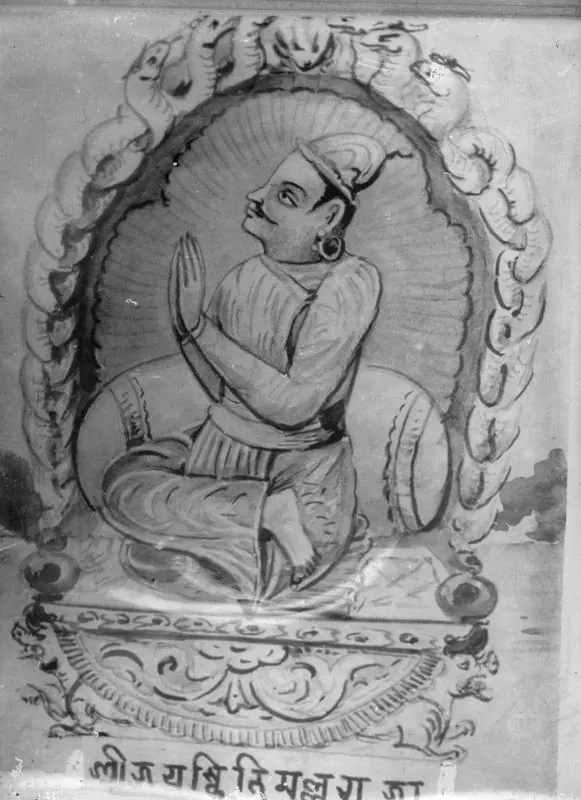
Jayasthiti Malla, proclaimed king in 1382, is credited by the chronicles with codifying law, standardising weights and measures, and arranging the population into ranked hereditary occupational groups — the formal ordering of caste among the Newars, whose social effects were long-lasting and are still debated. After the death of his grandson Yaksha Malla around 1482 the kingdom divided, and by the early sixteenth century three rival courts were settled at Kathmandu, Lalitpur and Bhaktapur. Their competition for trade and prestige funded an extraordinary period of building: the palace complexes and temple squares of the three durbar squares, now World Heritage sites, date largely from this rivalry. It also left the valley politically fragmented, a weakness that proved decisive when the Gorkha kingdom advanced in the eighteenth century.
- 12451245 – 1306
Araniko carries Newar art to China
Araniko, also written Aniko or Anige, was born in the Kathmandu Valley during the reign of Abhaya Malla and became one of the most consequential artists in Asian history.
Read more
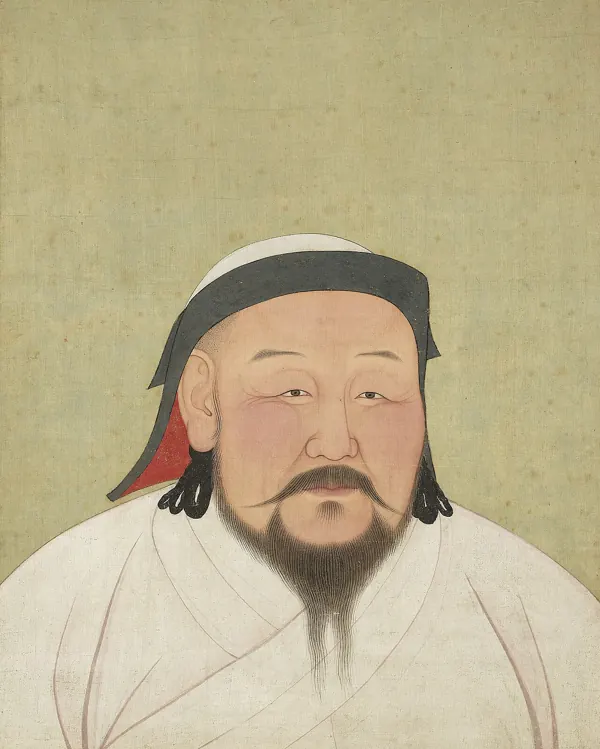
Sent as a young man to Tibet to build a golden stupa, he was ordained a monk there, and was then sent on to the court of Kublai Khan, founder of the Yuan dynasty. He led a team of eighty artists and craftsmen and spent the rest of his life in China, rising to senior office in the imperial workshops. His best-known work is the White Stupa at the Miaoying Temple in Beijing, still standing today. Through him the trans-Himalayan artistic tradition of the Newars reached the Chinese court and shaped Yuan religious art and architecture. He later renounced monkhood and raised a family. In Nepal he is remembered as evidence of how far the valley's craftsmanship travelled, and the highway linking Kathmandu to the Tibetan border is named after him.
- 12551255
A great earthquake kills King Abhaya Malla
On 7 June 1255 a major earthquake struck the Kathmandu Valley.
Read more
The Nepali chronicles say it killed more than a third of the valley's people, and that King Abhaya Malla, who had reigned since about 1216, was injured and died some six days later. His son Jayadeva Malla succeeded him.
The reign had already been unsettled: rebels had attacked Kirtipur and part of Bhaktapur in 1242, and an army from Tirhut reached Gokarna in 1245. The chronicles give no detailed toll, and the figure of a third is a general estimate rather than a count.
Modern geology has backed the chronicle record. A 2012 study by researchers from Nepal, France and Singapore, published in Nature Geoscience, used carbon dating of displaced river sediments to link a surface-rupturing earthquake in eastern Nepal to the great quake of 1255. Most accounts give the date as 7 June; a press report of the study gave 7 July.
- 1349c. 1349
The Sultan of Bengal's army sacks Swayambhu
In the mid-fourteenth century an army sent by Shamsuddin Ilyas Shah, Sultan of Bengal, entered the Kathmandu Valley, the first Muslim force recorded there.
Read more
The historian Baburam Acharya dated the raid to 1349 or 1349/50, beginning on the 21st of Marga (November or December); other accounts give 1346.
An inscription at Swayambhu records that the stupa was looted, and the same record is cited for severe damage to the Pashupatinath temple. Acharya wrote that the invaders burned houses and chaityas in Kathmandu after finding the people gone, and attacked Bhaktapur. No death toll is known.
The valley was politically divided at the time. The army withdrew after a short stay, and neither Nepali nor Bengali records explain why.
- 1382c. 1382 – 1395
Jayasthiti Malla brings the valley under one rule
Jayasthiti Malla ruled the Kathmandu Valley from about 1382 until his death in 1395, after decades in which it had been divided among rival lords.
Read more
He rose through his marriage to Rajalladevi, heir of the Bhaktapur royal house, through alliances with nobles, and through victories over rivals in 1372 and 1374. He sent the reigning king, Jayarjuna, into exile at Banepa in November 1381 and was proclaimed king in September 1382. His three sons ruled jointly after him.
He is remembered above all for a social code. The chronicles credit him with fixing occupations and ranks by caste across the valley's communities, assigning priestly and administrative roles, crafts and trades, and with reforms to punishment under which fines replaced beatings. Historians debate how much of this was new and how much codified existing practice, but the order it describes shaped Newar society for centuries.
His control was never complete: during his reign the Bhontas declared independence and the lords of Patan pressed for autonomy.
- 1428c. 1428 – 1482
Yaksha Malla's reign, and the valley splits into three
Yaksha Malla ruled from Bhaktapur from about 1428 until his death in 1482, the last king to rule the whole valley.
Read more
The chronicles credit him with raids south into Mithila and Bihar, with control of the trade route to Tibet, and with taking the Tibetan stronghold of Shelkar Dzong. In Bhaktapur he is said to have ringed the city with walls and moats, built a copy of the Pashupatinath temple and created the Siddha Pokhari tank. A copperplate of 1446 belongs to his reign, and the Mul Chok of the Bhaktapur palace is dated 1455.
After his death the kingdom was divided among his sons. Raya Malla held Bhaktapur and Ratna Malla Kantipur (Kathmandu); Lalitpur (Patan) became a third kingdom, and a fourth at Banepa was soon absorbed by Bhaktapur. For the next three centuries Bhaktapur (Khwopa), Kantipur (Yen) and Lalitpur (Yala) were rivals, often at war, and competed in building their palace squares.
- 16331633 (Malla era)
Nepal Bhasa, the language of the Malla courts
Nepal Bhasa, the Newar language, was the court and literary language of the Malla kingdoms, and Nepal Sambat their official calendar, used on coins, inscriptions and royal decrees.
Read more
The earliest dated palm-leaf manuscript in the language, from Uku Baha in Patan, is dated Nepal Sambat 234, or 1114.
Under Jayasthiti Malla in the fourteenth century, Sanskrit classics were first translated into Nepal Bhasa, and the Gopal Raj Vamshavali, a chronicle of the valley's kings, dates from the same period. Drama flourished later at all three courts: Siddhi Narasimha Malla of Patan wrote the Ekadashivrata in 1633, described as the first Newar drama, and Jaya Prakash Malla and Ranajit Malla of Bhaktapur were known as playwrights. Jagat Prakasha Malla compiled 519 poems in the Nepalabhashaya Gita.
After the Gorkha conquest the language lost its official standing to Gorkhali, the forerunner of today's Nepali, and the Shaka calendar replaced Nepal Sambat in official use. Nepal Bhasa was still used in the Nepal–Tibet treaty of 1775, and in 2011 the government decided to adopt Nepal Sambat as a national calendar.
- 16371637
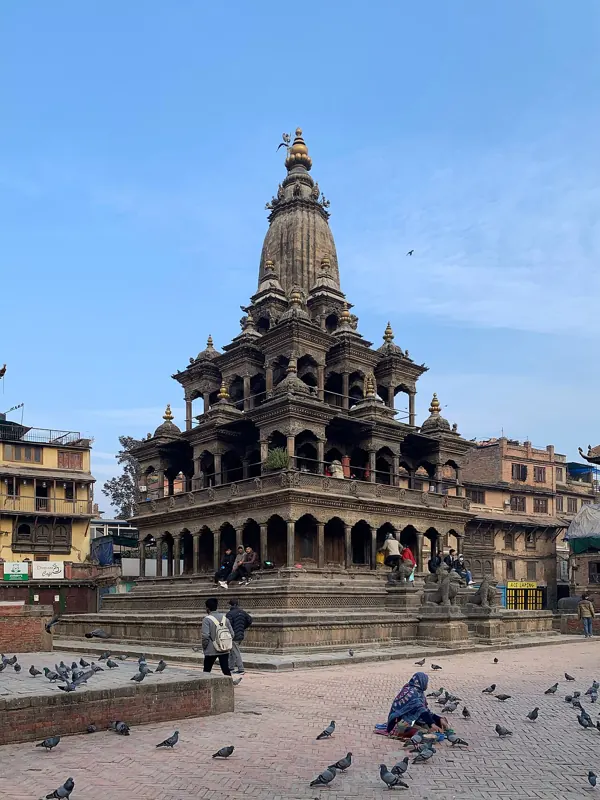
The Krishna Mandir rises in Patan
The Krishna Mandir, the stone temple that dominates Patan Durbar Square, is usually dated to 1637 and credited to King Siddhi Narasimha Malla of Lalitpur, who reigned from 1620 to 1661.
Read more
Some accounts give 1667; 1637 is the date most widely cited.
It is built in the shikhara style rather than the valley's tiered pagoda form: three storeys beneath twenty-one pinnacles, with statues of Vishnu on Garuda around the base of the main tower. Friezes along the beams of the first and second floors show scenes from the Mahabharata and the Ramayana, captioned in Newar script.
Tradition says the king dreamed of Krishna and Radha standing before the palace and ordered a temple built on that spot. The same king is credited with the Vishwanath temple of 1627 and the original Taleju temple of 1640 in the same square. The Krishna Mandir was damaged in the 2015 earthquake and restored by 2018, and it remains the centre of the Krishna Janmashtami celebrations in Patan.
- 16541654
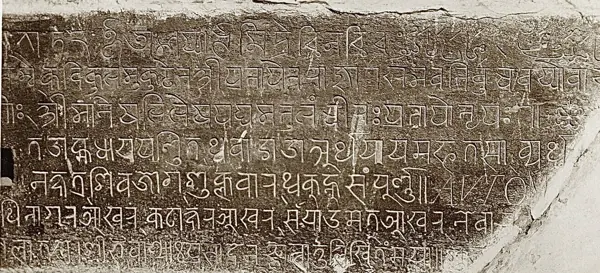
Pratap Malla's inscription in fifteen scripts
In Kathmandu Durbar Square stands a stone inscription dated Nepal Sambat 774, or 1654, set up by King Pratap Malla of Kantipur, who ruled from 1641 to 1674.
Read more
It is an invocation to the goddess Kalika written in fifteen scripts, and in it the king says that he composed verses in fifteen scripts; some descriptions count fourteen. The stone served as a water spout, and a local saying holds that milk would flow from it if anyone could read every script.
Pratap Malla styled himself Kavindra, king of poets. He is credited with 138 poems in Nepal Bhasa, about forty of which survive, and with Sanskrit hymns in temple inscriptions. His coins carried his name in Newar script, and Kantipur profited from minting coins for Tibet. He tried and failed to bring all three kingdoms under his rule, but built widely in Kathmandu, including the Rani Pokhari pond (1669 or 1670), built to console his queen after the death of their son.
- 17021758/59 BS1702
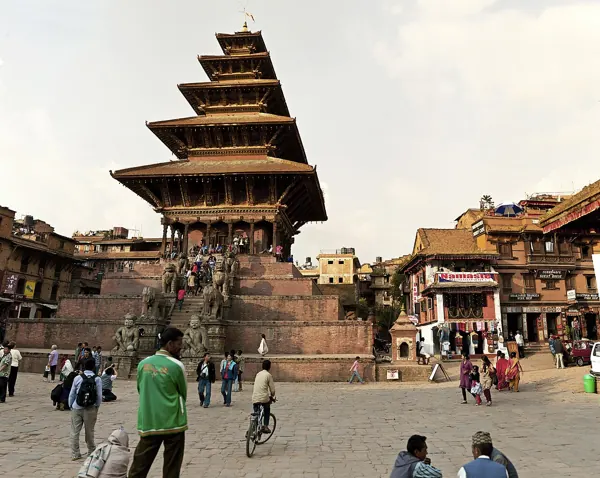
The Nyatapola, Nepal's tallest temple, in Bhaktapur
The Nyatapola, a five-storey pagoda on Taumadhi Square in Bhaktapur, was completed in 1702 on the orders of King Bhupatindra Malla, who reigned from 1696 to 1722.
Read more
At about 30 metres it is the tallest temple in the valley and one of only two of five storeys, the other being the Kumbheshwar temple in Patan. Accounts of the building time differ, but all describe it as remarkably fast, a matter of months.
Five pairs of stone guardians line its stairway: wrestlers at the bottom, then elephants, lions, sardulas (mythical lion-like beasts) and, at the top, the goddesses Simhini and Vyaghrini, each pair said to be ten times stronger than the one below.
The temple came through the earthquakes of 1934 and 2015 that badly damaged the rest of Bhaktapur, and is often cited as evidence of the skill of Malla-era builders. Bhupatindra Malla also completed the remodelled Palace of Fifty-five Windows in 1708, and his play Gaurivivaha, in Nepal Bhasa, was staged in Patan in 1707.
- 17571813/14 BS1757
Jaya Prakash Malla builds the Kumari Ghar
The Kumari Ghar, the house of the living goddess in Kathmandu Durbar Square, was built in 1757 (1813 BS) by King Jaya Prakash Malla.
Read more
It is a three-storey Newar building around a courtyard, with a carved wooden toran over the entrance and a stone chaitya in the courtyard.
The Kumari tradition is older than the house. It is first recorded in an inscription of 1280, under Ananta Malla, and some chronicles credit Trailokya Malla, in the late sixteenth century, with formalising it. The Kumari is chosen from girls of the Shakya and Bajracharya families of the Newar community; Jaya Prakash Malla is said to have begun the Kumari's chariot procession at Indra Jatra in 1756.
A popular legend links the custom to the king himself: the goddess Taleju played dice with him each night on condition that he tell no one, vanished when his daughter followed him, and later told him in a dream to seek her in a young Shakya girl. It is a story, not a record. Jaya Prakash Malla was the last Malla king of Kathmandu; he lost the city to Prithvi Narayan Shah during Indra Jatra in 1768.

Unification and Rana rule
The Gorkha conquest of the valley, wars with Tibet, China and the East India Company, the first Gurkha battalions, and a century in which hereditary Rana prime ministers held power.
- 17681825 BS1768 – 1769
The Gorkha conquest of the valley
Prithvi Narayan Shah, king of the small hill state of Gorkha, spent more than two decades encircling the Kathmandu Valley before taking it.
Read more
The fortified town of Kirtipur resisted longest, beating back Gorkhali assaults in 1757 and 1764 — his commander Kalu Pande was killed in the first — and falling only at the third attempt after betrayal from within. Later foreign accounts, by the Capuchin priest Giuseppe and by Colonel Kirkpatrick, report that the king then had the noses and lips of the town's men cut off as a warning; the story is widely repeated in Nepal and disputed by some historians, who question these second-hand sources. Kathmandu fell in 1768 and Prithvi Narayan Shah was proclaimed king there on 25 September; Patan submitted soon after and Bhaktapur in 1769. He described the new state as a yam between two boulders, and his campaign is remembered very differently by different communities: as the founding of a unified Nepal, and, particularly among Newars, as a conquest that ended their own kings.
- 17691825/26 BS1769 – 2008
The Shah dynasty
The dynasty founded by Prithvi Narayan Shah reigned over Nepal for 240 years, longer than almost any other in modern Asia.
Read more
Its early decades saw rapid expansion across the Himalaya, halted by war with Qing China in 1792 and by the East India Company in 1816. From 1846 the Shah kings were reduced to figureheads under the hereditary Rana prime ministers, regaining real power only in 1951. King Mahendra dismissed the elected government in 1960 and ruled through the partyless Panchayat system; King Birendra accepted a constitutional role after the 1990 People's Movement. The dynasty's last years were catastrophic: the palace massacre of 2001, King Gyanendra's seizure of direct power in 2005, and the mass protests that followed. The Constituent Assembly abolished the monarchy on 28 May 2008. Nepalis remain divided about the Shah legacy, and monarchist sentiment has not disappeared — but the institution itself ended by a vote of 560 to 4.
- 17881844/45 BS1788 – 1792
War with Tibet and Qing China
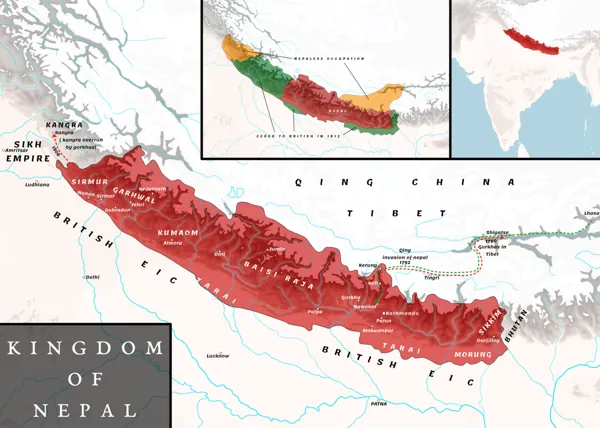
Disputes over debased coinage, trade and salt, and over Nepal's sheltering of a Tibetan lama, led Nepal to send forces across the Himalaya in 1788.
Read more
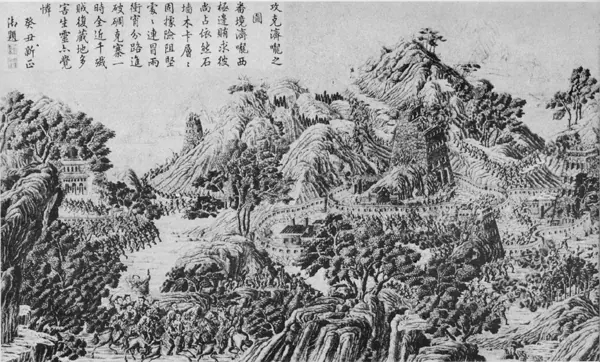
Gorkhali troops occupied territory around Kuti and Kerung, and a settlement in 1789 required Tibet to pay Nepal an annual sum. When payment stopped, Nepal attacked again in 1791, reaching Shigatse and looting the Tashilhunpo monastery. Tibet appealed to its Qing overlords, and in 1792 the Qianlong emperor sent a large army under the general Fuk'anggan, which drove the Nepali forces back over the passes and advanced towards Kathmandu before being checked near the Betrawati river. The Treaty of Betrawati closed the war in October 1792: Nepal returned its loot, accepted a formal tributary relationship with the Qing court involving missions every five years, and gained trading rights. The war ended Nepal's northward expansion and turned its ambitions west and south — towards a collision with the British.
- 18141871 BS1814 – 1816
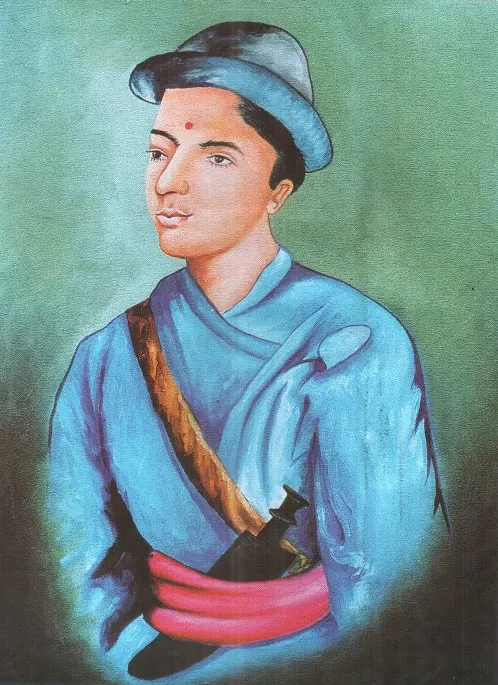
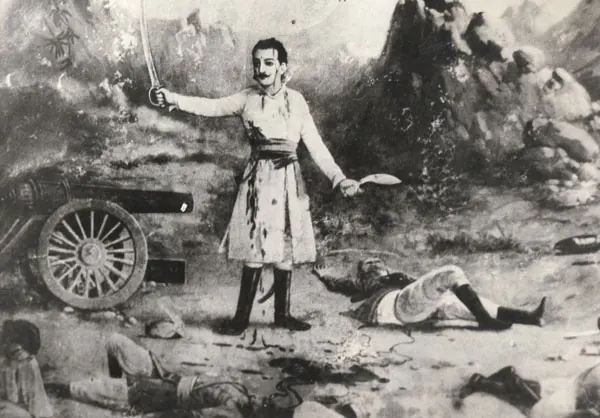
The Anglo-Nepalese War
Nepal's expansion along the Himalaya and into the Terai brought it into conflict with the East India Company, which declared war on 1 November 1814. British columns advanced on several fronts and fared badly at first.
Read more
At Nalapani, near Dehradun, a garrison of about six hundred under Balbhadra Kunwar held out for a month against far larger forces, killing Major-General Rollo Gillespie, before breaking out; the fighting at Jaithak was similarly costly. In the west, Major-General David Ochterlony's methodical campaign eventually broke Nepali resistance. The veteran commander Bhakti Thapa was killed at Deuthal, and Amar Singh Thapa surrendered on terms in May 1815. A second campaign reached Makwanpur, close to Kathmandu, and forced Nepal to terms. Both sides emerged with lasting respect for the other's soldiers — a respect that would shape the next two hundred years of Nepal's relationship with Britain.
- 18151871/72 BS1815
The first Gurkha battalions in British service
The war left British officers deeply impressed by the soldiers they had fought.
Read more
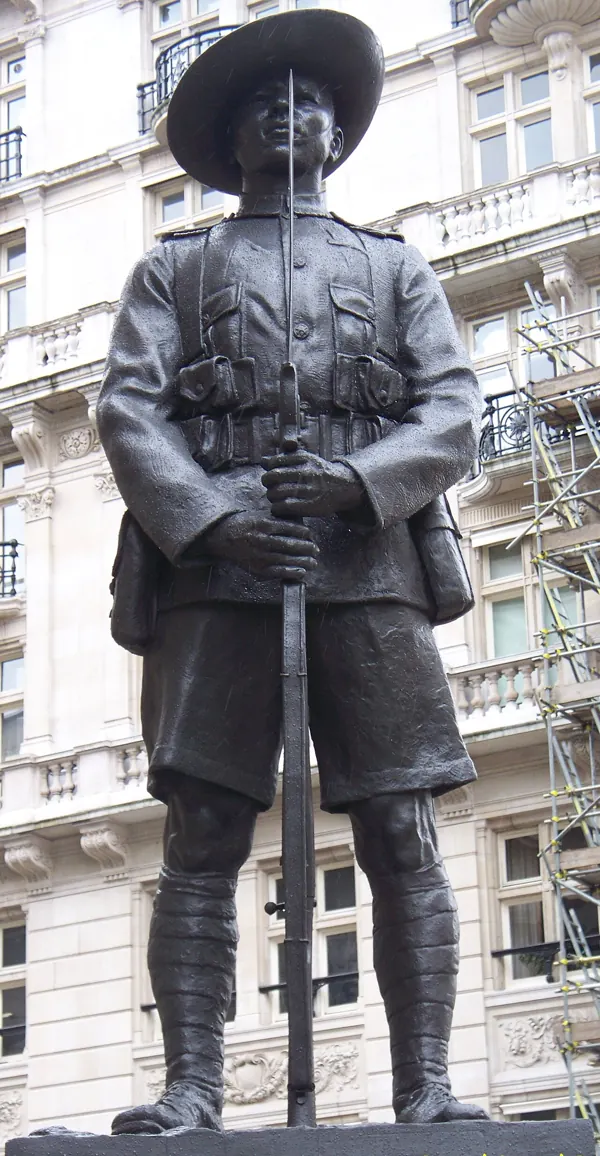
During the campaign, Ochterlony and the political agent William Fraser recruited Nepali and hill soldiers — many of them deserters or men released after surrenders — into irregular units. In 1815 three battalions were raised that became the ancestors of the British Gurkha regiments: the Nasiri battalion, the Sirmoor battalion raised by Fraser and Lieutenant Frederick Young, and the Kumaon battalion, later the 1st, 2nd and 3rd Gurkha Rifles. The Treaty of Sugauli did not itself create a recruitment system and Nepal's rulers were at first reluctant; regular, officially sanctioned recruitment developed only over the following decades. From these beginnings grew a military relationship lasting more than two centuries, taking Nepali soldiers to the two world wars, Malaya, Borneo, Hong Kong, the Falklands and Afghanistan — and eventually bringing Gurkha families and veterans to settle in Britain.
- 18161872 BS4 March 1816
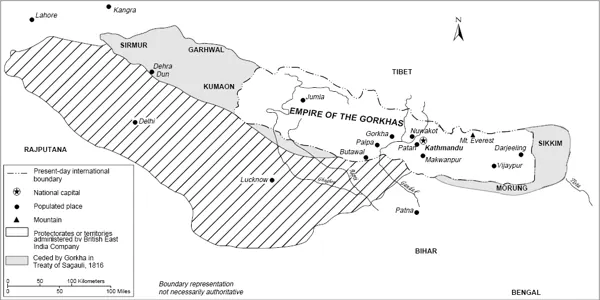
The Treaty of Sugauli
The treaty that ended the Anglo-Nepalese War was signed at Sugauli in December 1815 and ratified on 4 March 1816.
Read more
Nepal ceded roughly a third of its territory: Sikkim, most of the lands west of the Mahakali river including Kumaon and Garhwal, and large parts of the Terai, though some Terai land was returned in 1860 in recognition of Nepali help during the Indian rebellion. Nepal also accepted a British Resident in Kathmandu, an intrusion the court resented and worked hard to limit. The treaty fixed Nepal's modern boundaries and, with them, arguments that have never quite closed — most visibly over Kalapani, Lipulekh and Limpiyadhura in the far north-west, where Nepal and India read the treaty's description of the Mahakali's source differently. Nepal was never colonised, and the treaty is often cited as evidence of that; it also marked the end of its expansion and the beginning of a long, careful accommodation with British power.
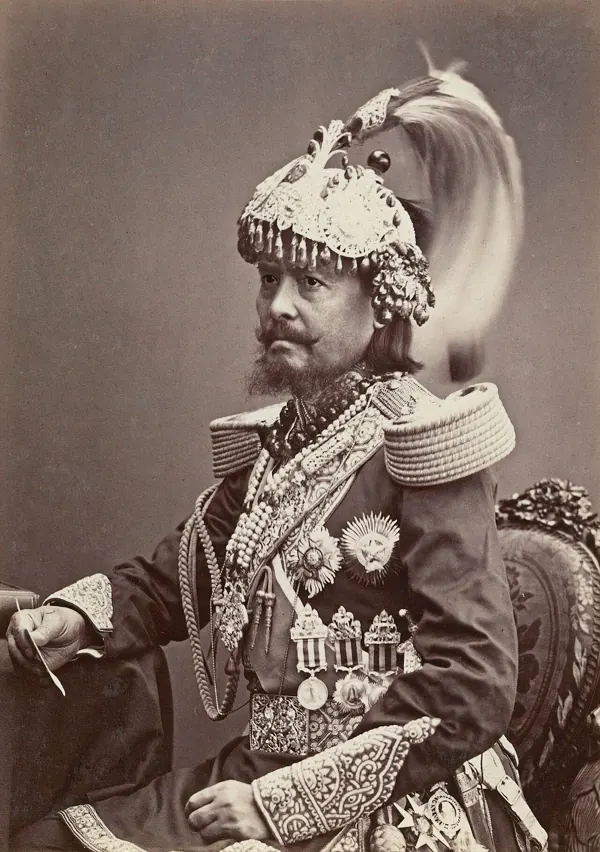
- 18461903 BS1846 – 1951
The Kot massacre and a century of Rana rule
On the night of 14 September 1846, after the murder of General Gagan Singh Bhandari, Queen Rajya Lakshmi Devi summoned the court to the Kot, an armoury courtyard beside the palace, and demanded the culprits be named.
Read more
Accounts differ, but fighting broke out and dozens of nobles were killed, among them the prime minister Fateh Jung Shah. Jung Bahadur Kunwar, who commanded troops at the scene, emerged in control, became prime minister within days, took the title Rana and secured hereditary powers that reduced the Shah kings to figureheads for the next 104 years. Historians disagree over how far the killings were planned and by whom. Under the Ranas Nepal stayed independent but largely closed: little schooling, almost no roads or industry, no political parties and no press, alongside enormous palaces built in Kathmandu. Their rule ended in 1951. The period is remembered for that isolation, and for the diplomatic achievements — the 1923 treaty, the abolition of slavery — that came with it.
- 19141970/71 BS1914 – 1945
Nepal in the two world wars
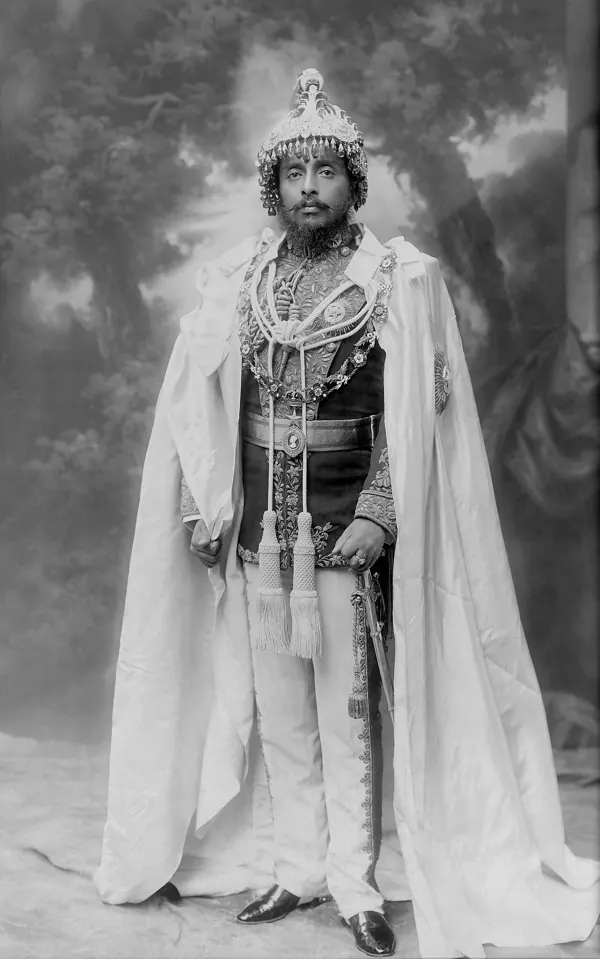
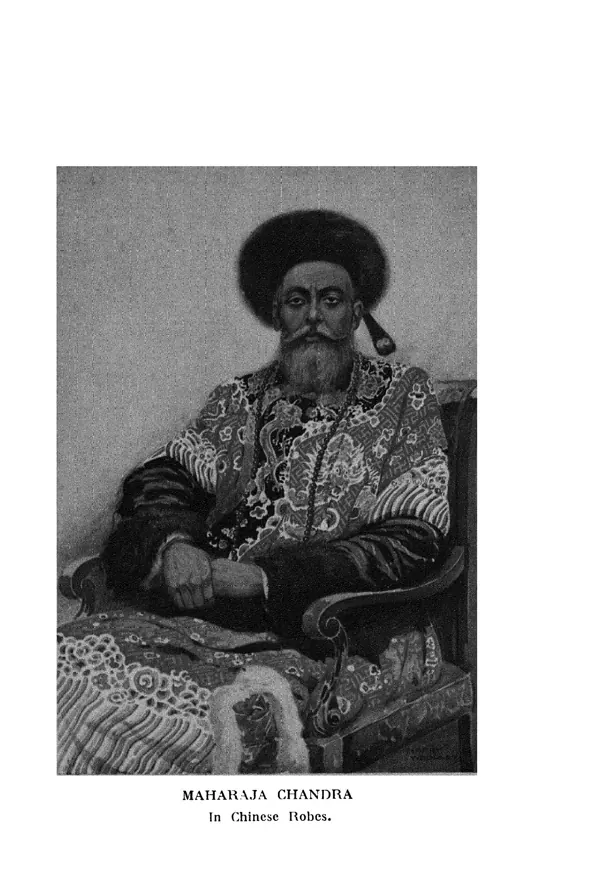
When war broke out in 1914 the prime minister Chandra Shumsher placed Nepal's resources at Britain's disposal.
Read more
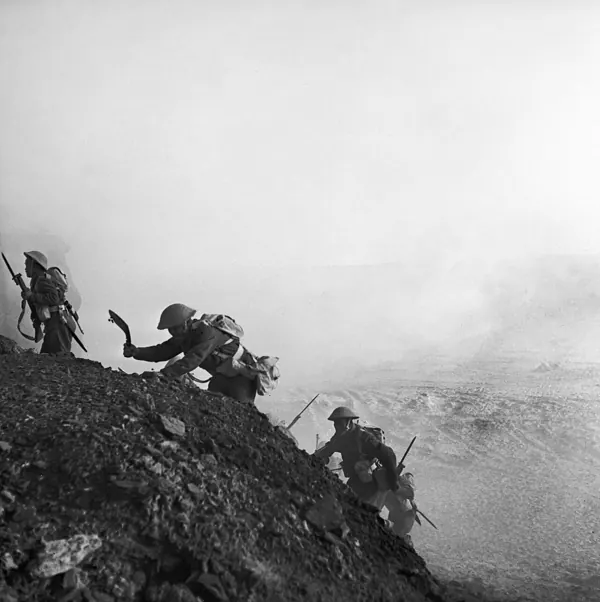
Recruitment into the Gurkha regiments expanded enormously and Nepal sent troops of its own army to India to release units for service abroad. Estimates put the number of Nepalis who served in the First World War at around two hundred thousand, fighting in France, Gallipoli, Mesopotamia, Palestine and on the North-West Frontier, with roughly twenty thousand killed and wounded. Nepal declared war on Germany on 4 September 1939, the day after Britain, and the pattern repeated on a larger scale: around a quarter of a million Nepalis served in the Second World War, in North Africa, Italy, Greece, Syria, Malaya, Singapore and above all Burma, with casualties usually put near thirty-two thousand and more than two and a half thousand awards for gallantry. The losses were felt across the hill districts, and the money, pensions and experience the survivors brought home reshaped village economies and, in time, Nepali politics.
- 19231980 BS21 December 1923
Britain formally recognises Nepal's independence
Signed in Kathmandu on 21 December 1923 by the prime minister Chandra Shumsher and the British envoy Lieutenant-Colonel William Frederick O'Connor, the Treaty of Perpetual Peace and Friendship replaced the arrangements that had governed relations since Sugauli.
Read more
Its first article recorded mutual recognition of each state's independence, internal and external, and undertook that each would respect the other's sovereignty. It also allowed Nepal to import arms and munitions through British India for its own defence, and exempted Nepali government goods from Indian customs duties. The treaty was registered with the League of Nations in 1925. Nepal had never been annexed or made a protectorate, but the treaty put its status beyond argument at a time when almost every neighbour was under colonial rule, and it is generally regarded as the principal diplomatic achievement of the Rana period. It also confirmed the continued recruitment of Nepali soldiers into British service.
- 19241981 BS1924 – 1925
The abolition of slavery
On 28 November 1924 Chandra Shumsher delivered a long public address setting out the case for ending slavery in Nepal, and emancipation was carried through over the following months, taking effect in 1925.
Read more
Slavery had existed in several forms, and earlier restrictions — a ban on enslaving Brahmins and Chhetris in 1803, further measures in 1839 — had had limited effect. Under the new arrangements owners were compensated from state and temple funds rather than the freed people receiving reparation, and contemporary British press reports put the number emancipated at between fifty and sixty thousand. The reform was widely praised abroad and did a great deal for the regime's international reputation. Its effects at home were more limited: freed families often lacked land or capital, and other forms of bonded and unfree labour, notably the kamaiya and haliya systems, persisted for decades. Kamaiya bonded labour was formally abolished only in 2000, and haliya in 2008.
- 19341990 BS15 January 1934
The Nepal–Bihar earthquake
Shortly after two o'clock in the afternoon of 15 January 1934, an earthquake of about magnitude 8 struck the eastern Himalaya, with its epicentre in eastern Nepal south of Mount Everest.
Read more
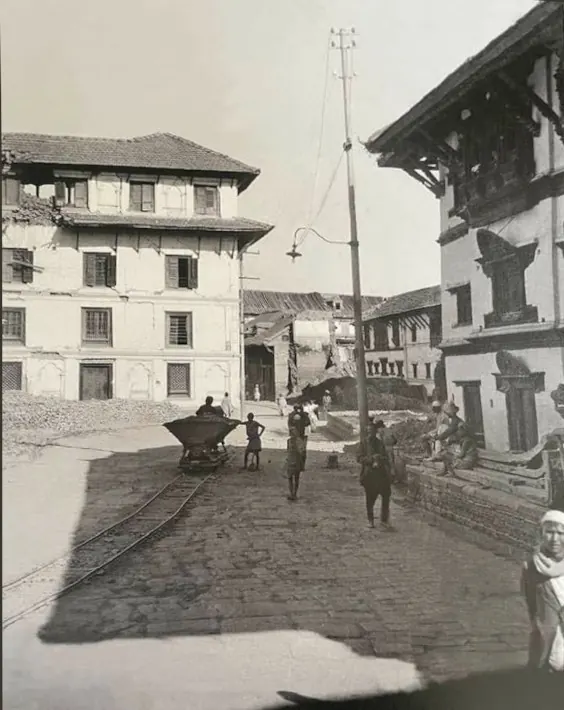
It remains one of the most destructive earthquakes recorded in South Asia. Estimates of the dead range from about ten to twelve thousand across Nepal and the Indian province of Bihar, where more than seven thousand deaths were recorded. In the Kathmandu Valley the damage was severe: a large proportion of buildings in Kathmandu, Patan and Bhaktapur were destroyed or badly damaged, including temples and palace structures, and fields and roads were split by ground cracking and liquefaction. Reconstruction under the Rana prime minister Juddha Shumsher reshaped parts of Kathmandu, with new streets and buildings replacing older fabric; the Dharahara tower that fell in 2015 dated from this rebuilding. In Bihar the disaster drew national attention in India, and relief work there involved Gandhi and other Congress leaders.
- 19411997 BSJanuary 1941
The four martyrs
Organised opposition to Rana rule took shape in the 1930s with the Nepal Praja Parishad, founded around 1936 by Tanka Prasad Acharya, Dasharath Chand, Dharma Bhakta Mathema, Ganga Lal Shrestha and others.
Read more
Parties, meetings and a free press were banned, so the group worked in secret, circulating handwritten leaflets and making contact with the exiled king Tribhuvan. In 1940 the network was betrayed and its members arrested. Death sentences followed in January 1941. Shukraraj Shastri, a scholar already imprisoned for his teaching, was hanged at Pachali in Teku on 24 January; Dharma Bhakta Mathema, a wrestler who had trained the young king, was hanged days later; Ganga Lal Shrestha and Dasharath Chand were shot beside the Bishnumati at Shobha Bhagwati on 28 January. Acharya's sentence was commuted to life imprisonment because his caste protected him from execution under the law of the time. The four are commemorated each year on Martyrs' Day, and the executions hardened the opposition rather than ending it.
- 19472003 BS1947 – 1949
Parties form in exile; workers strike at Biratnagar
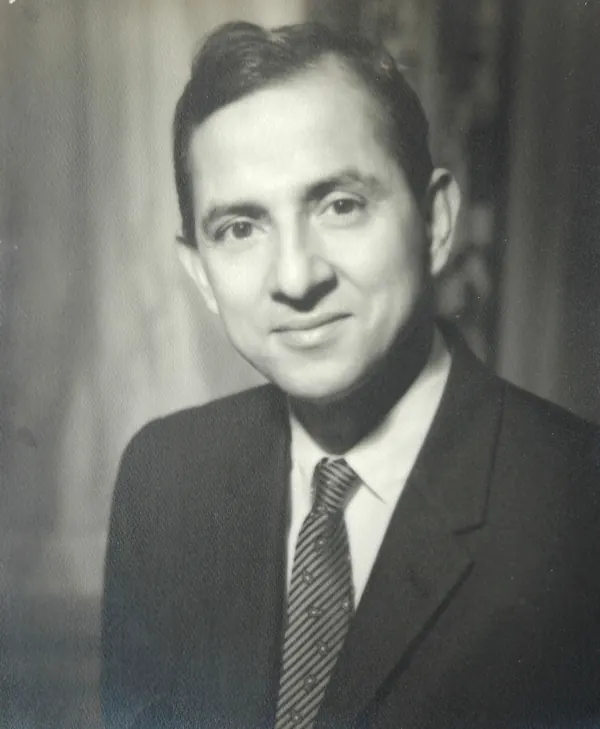
Nepali exiles in India, many influenced by the independence movement there, formed the Nepali National Congress in Calcutta in January 1947 under B. P.
Read more
Koirala, with Tanka Prasad Acharya elected president in absentia while imprisoned in Nepal. Within weeks the new party was drawn into the first large industrial action in Nepal's history, a strike at the jute mills of Biratnagar that began in March 1947 over pay and conditions and broadened into a demand for civil liberties. The government sent troops and marched the leaders, Koirala among them, to Kathmandu. In 1950 the party merged with Subarna Shamsher Rana's Nepal Democratic Congress to form the Nepali Congress. On 15 September 1949 a small group in Calcutta announced the Communist Party of Nepal under Pushpa Lal Shrestha, deliberately choosing the anniversary of Jung Bahadur's seizure of power. The two traditions founded in these three years have dominated Nepali politics ever since.
Democracy and conflict
The end of Rana rule, a first elected government, three decades of the partyless Panchayat system, the 1990 People's Movement, a decade of Maoist insurgency and the 2006 peace accord.
- 19502007 BSNovember 1950 – February 1951
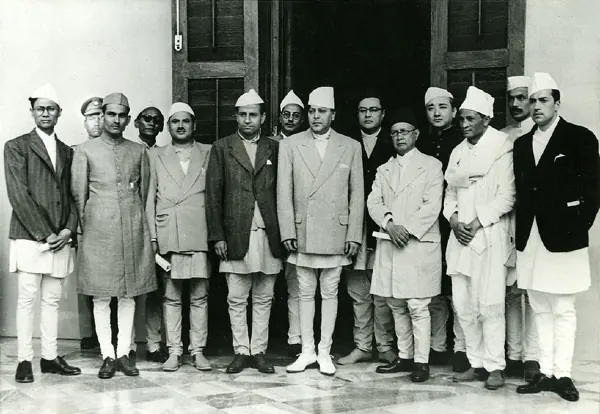
Revolution ends 104 years of Rana rule
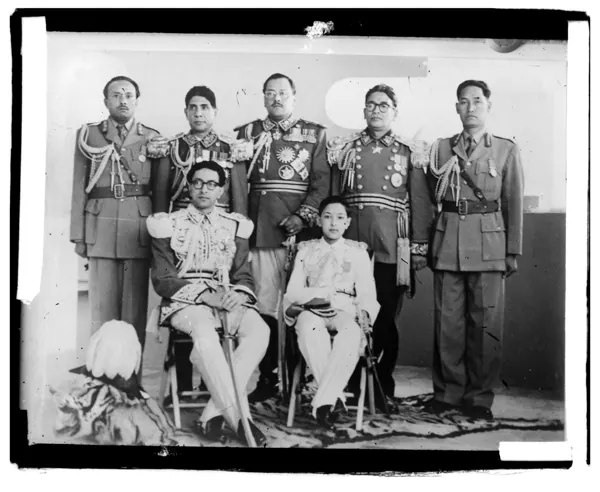
On 6 November 1950 King Tribhuvan left the palace and took refuge in the Indian embassy in Kathmandu, and was flown to Delhi.
Read more
On the night of 10 to 11 November the Nepali Congress launched an armed uprising from Indian territory, its Mukti Sena taking Birgunj and fighting in the eastern and western Terai. The Rana government, isolated and facing an Indian government unwilling to prop it up, entered negotiations in Delhi with the King and the Congress. The resulting tripartite settlement, usually called the Delhi Agreement, returned Tribhuvan as head of state and provided for a coalition cabinet and an eventual constituent assembly. He flew back to Kathmandu on 15 February 1951 and proclaimed the end of the Rana regime on 18 February. The settlement remains contested: some see it as the founding act of Nepali democracy, others as a compromise that preserved Rana and palace power and gave India lasting leverage. The promised constituent assembly was never convened.
- 19532010 BS29 May 1953
First ascent of Sagarmatha
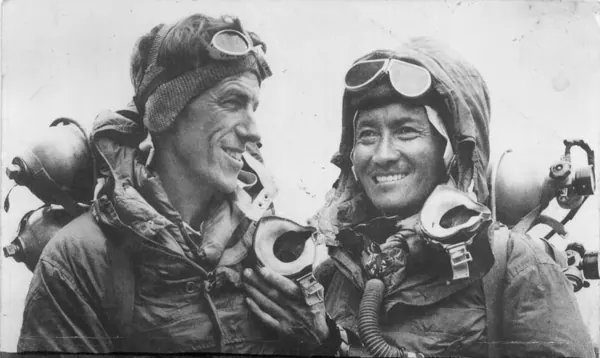
At about half past eleven on the morning of 29 May 1953, Tenzing Norgay and Edmund Hillary stood on the summit of the world's highest mountain, known in Nepali as Sagarmatha and in Tibetan as Chomolungma.
Read more
They were part of a British expedition led by Colonel John Hunt, which approached from the Nepali side through the Khumbu Icefall and the Western Cwm — a route possible only because Nepal had opened its northern valleys to foreign expeditions after 1949. Tenzing, a Sherpa raised in the Khumbu and long resident in Darjeeling, had already made several attempts on the mountain. News reached London on 2 June, the morning of Queen Elizabeth II's coronation, and the climb became a global story; the two men always declined to say who stepped up first, describing it as a joint effort. Nepal had begun issuing tourist visas and receiving its first organised tourist parties by 1955, and mountaineering and trekking grew into one of the country's largest industries.
- 19552012 BS14 December 1955
Nepal joins the United Nations
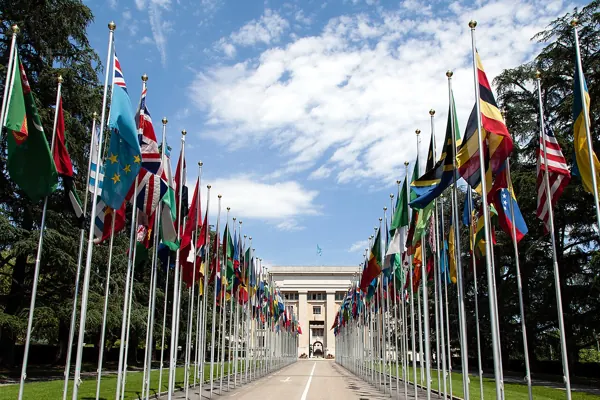
Nepal became the eightieth member of the United Nations on 14 December 1955.
Read more
It had first applied in 1949, while still under Rana rule, but the application was blocked in the Security Council by a Soviet veto amid the deadlock of the early Cold War, in which each bloc obstructed applicants associated with the other. The impasse was broken by a package deal that admitted sixteen states at once, among them Nepal, Sri Lanka, Ireland, Italy, Jordan, Libya, Cambodia and Laos. Membership mattered a great deal to a small landlocked state wedged between India and China: it gave Nepal a seat and a voice in a forum where its formal equality with its neighbours was recognised, and it anchored the non-aligned foreign policy pursued by King Mahendra and his successors. Nepal has since become one of the world's largest contributors of troops and police to UN peacekeeping, and the UN played a direct role in monitoring Nepal's own peace process after 2006.
- 19592015 BSFebruary – May 1959
Nepal's first elected government
The constituent assembly promised in 1951 was never convened.
Read more
Instead King Mahendra, who had succeeded Tribhuvan in 1955, promulgated a constitution in February 1959 providing for a parliament under the Crown, and ordered a general election. Voting ran from 18 February to 3 April, staggered across the country because of the difficulty of moving ballot boxes through the hills; most voters could not read, and parties were identified by symbols. The Nepali Congress won 74 of the 109 seats on about 38 per cent of the vote, and B. P. Koirala was sworn in on 27 May 1959 as Nepal's first elected prime minister. His government moved quickly on land reform, the abolition of birta landholdings, taxation of large estates and the reorganisation of local administration — measures that won support among tenants but alienated landowners, sections of the aristocracy and the palace. The constitution reserved substantial emergency powers to the King, a tension resolved within eighteen months.
- 19602017 BS15 December 1960
The King dismisses the elected government
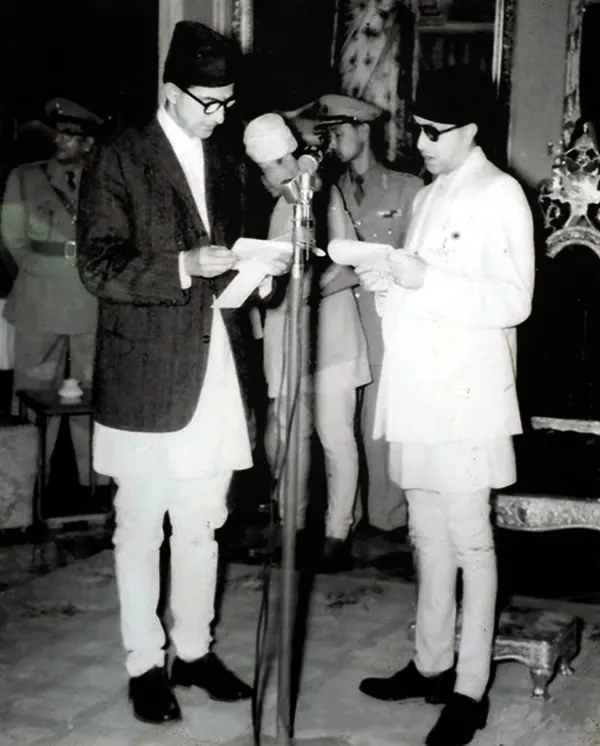
On 15 December 1960, eighteen months after the election, King Mahendra used the emergency powers in his own constitution to dismiss the Nepali Congress government, dissolve parliament, suspend the constitution and ban political parties.
Read more
Prime Minister B. P. Koirala, his cabinet colleagues and hundreds of party workers were arrested; Koirala was held without trial until 1968 and then went into exile in Banaras, returning voluntarily in 1976 under his policy of national reconciliation and dying in Kathmandu in 1982. The King justified the takeover by charging the government with corruption, incompetence and failing to safeguard national unity. His critics then and since have argued that the real motive was the threat an organised mass party and its land reforms posed to the monarchy, and that Mahendra also feared the drift of Nepali politics towards India. It remains one of the most disputed moments in modern Nepali history — read by some as a rescue of national stability, by others as the theft of a democratic mandate.
- 19622019 BS1962 – 1990
The partyless Panchayat system
King Mahendra introduced the Panchayat system in January 1961 and entrenched it in a new constitution promulgated on 16 December 1962. Political parties were banned outright.
Read more
In their place stood a pyramid of assemblies, from village and town panchayats through district bodies up to the national Rastriya Panchayat, with members at each level chosen largely by those below rather than directly by voters. It was presented as a guided democracy rooted in Nepali tradition and suited to a poor, largely rural country, with the King as active head of government and power exercised through the palace secretariat. Its defenders point to road building, the expansion of schooling, the growth of a national administration and a period of relative stability. Its critics point to censorship, the jailing and exile of opponents, the concentration of patronage around the palace, and the exclusion of most Nepalis from real decisions. Direct elections to the national body came only after 1980. The system was dissolved by royal proclamation on 17 April 1990.
- 19792035/36 BS1979
UNESCO lists the Kathmandu Valley as World Heritage
In 1979 UNESCO inscribed the Kathmandu Valley on the World Heritage List.
Read more
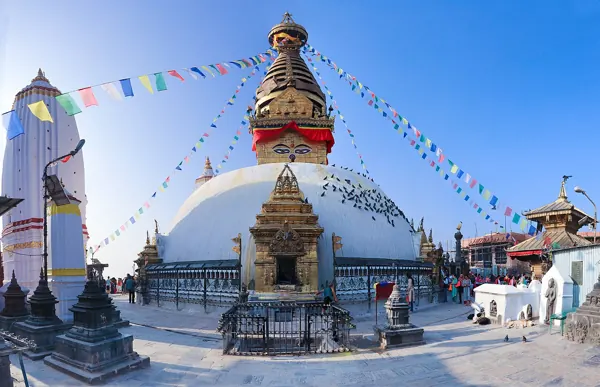
The listing covers seven monument zones: the Durbar Squares of Kathmandu, Patan and Bhaktapur, the Buddhist stupas of Swayambhunath and Boudhanath, and the Hindu temples of Pashupatinath and Changu Narayan. The boundaries were revised in 2006.
Much of what it protects was built or rebuilt under the Malla kings: the palaces and temples of the three Durbar Squares, the Krishna Mandir, the Nyatapola and the Kumari Ghar. Kasthamandap, the wooden pavilion in Kathmandu Durbar Square whose name means "wood-covered shelter", is traditionally dated to 1596 under Lakshmi Narasimha Malla, though excavations after 2015 dated its oldest parts to the seventh century.
From 2003 to 2007 the valley was on UNESCO's list of World Heritage in Danger, over concerns that the monument zones were losing their authentic character. The April 2015 earthquake severely damaged all three Durbar Squares: the Hari Shankar temple in Patan collapsed and Kasthamandap was reduced to rubble.
- 19802037 BS2 May 1980
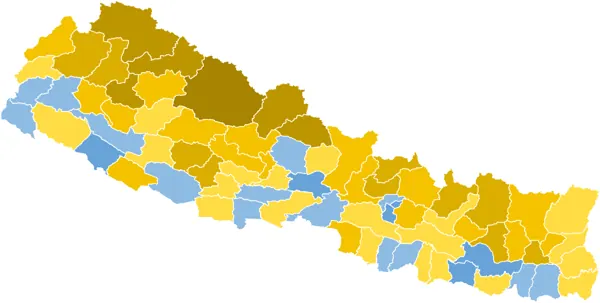
The referendum on the Panchayat system
Student protests that began in April 1979 over the execution of Pakistan's Zulfikar Ali Bhutto turned rapidly into a domestic agitation, spreading to around half of Nepal's districts; official figures recorded eleven dead and 164 injured.
Read more
Facing unrest the security forces could not easily contain, King Birendra announced a national referendum. On 2 May 1980 Nepalis voted in the first such poll in the country's history, choosing between the partyless Panchayat system with reforms and a multiparty system, marking yellow or blue on the ballot. Turnout was 66.9 per cent. The Panchayat option won with 54.9 per cent against 45.1 — a margin of under ten points. Parties remained formally banned but had campaigned openly, and the closeness of the result showed how substantial opposition sentiment had become. Opposition leaders alleged irregularities and misuse of state resources; supporters pointed to the turnout and to the fact that a losing side had been allowed to campaign at all.
- 19892045 BS1989 – 1990
India closes the border
Nepal's trade and transit treaties with India expired on 23 March 1989 and were not renewed. India closed thirteen of the fifteen agreed transit points, leaving a landlocked country with almost no route for imports.
Read more
Petrol, diesel, kerosene, salt, medicines and industrial inputs ran short within weeks; queues, rationing, factory closures and inflation followed, felt hardest by the urban poor and by hill districts at the end of long supply lines. The stated dispute was technical — India wanted a single combined treaty, Nepal insisted on separate trade and transit agreements as a matter of sovereign right. Behind it lay India's anger at Nepal's purchase of Chinese anti-aircraft weapons in 1988, a work-permit system applied to Indian nationals, and a wider deterioration in relations between Delhi and the palace. Nepali accounts generally call it a blockade; Indian officials rejected the term. The hardship discredited the Panchayat government and helped create the conditions for the movement of 1990.
- 19902046/47 BS1990s onwards
Foreign employment reshapes Nepal
Nepalis have long worked abroad — in Indian cities, in the Gurkha regiments, in the tea gardens of Darjeeling. From the 1990s the scale and direction changed.
Read more
Rules were liberalised, air links improved and recruitment agencies multiplied, and hundreds of thousands began leaving each year for Malaysia, Qatar, Saudi Arabia, the UAE and Kuwait, alongside the continuing open-border movement into India and smaller flows to Britain, Japan, Korea and Australia. Remittances grew from a marginal item into the mainstay of the economy, reaching roughly 6.7 billion US dollars by 2015 and around a quarter of national income by the 2020s, among the highest shares in the world. That money paid for food, housing, schooling and healthcare and cut measured poverty sharply. The cost has been heavy: workers routinely borrowed at high interest to pay recruitment fees, arrived to find contracts substituted, and worked in extreme heat with limited protection. Deaths abroad became a recurring subject of parliamentary and press scrutiny, and long separations reshaped families and left villages with few working-age adults.
- 19902046 BS1990
People's Movement I ends absolute monarchy
The Jana Andolan of 1990 brought the Panchayat system down.
Read more
Its distinguishing feature was unity: the Nepali Congress and the communist parties, grouped in the United Left Front, campaigned together, and the alliance produced both the movement's strength and, later, the Communist Party of Nepal (Unified Marxist-Leninist). Mass demonstrations, strikes and a security crackdown that killed dozens ran through February to April, and on 17 April King Birendra lifted the ban on political parties and dissolved the Panchayat system. A constitution promulgated on 9 November 1990 vested sovereignty in the people for the first time, guaranteed fundamental rights and made ministers answerable to an elected House of Representatives, while leaving the King as head of state, supreme commander of the army and holder of significant reserve powers. It also defined Nepal as a Hindu kingdom and did little for regional, ethnic and linguistic minorities. Those omissions became central grievances in the decades that followed. Nepal's first multiparty election in 32 years was held on 12 May 1991.
- 19962052 BS1996 – 2006
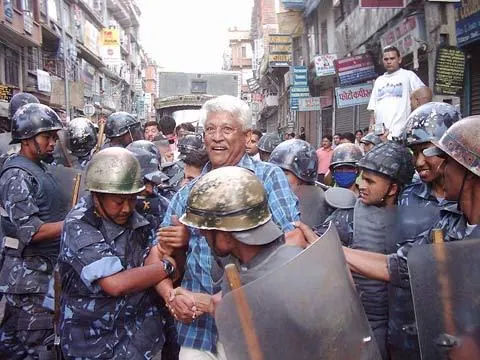
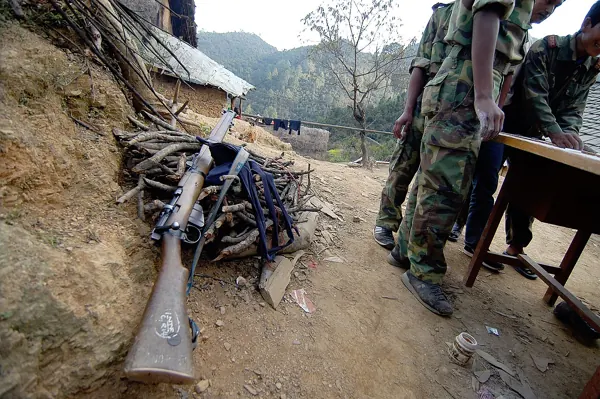
The Maoist insurgency and civil war
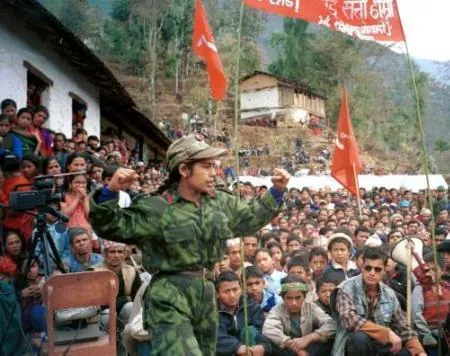
On 13 February 1996 the Communist Party of Nepal (Maoist) launched an armed insurgency with the stated aim of overthrowing the monarchy and establishing a people's republic.
Read more
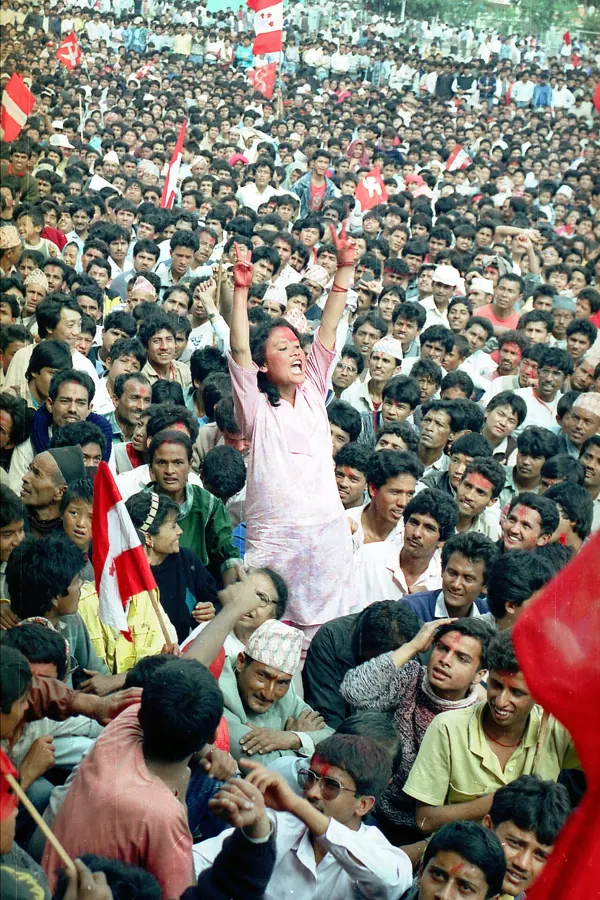
It began with attacks on police posts in Rolpa, Rukum and Sindhuli and spread over a decade into most of the country, drawing on real grievances — landlessness, caste and regional exclusion, the failure of the 1990 settlement to reach rural Nepal — and prosecuted through guerrilla warfare, parallel administration and, at times, extortion and abduction. The state's response, particularly after the army was deployed in 2001, involved mass detentions, disappearances and extrajudicial killings. The UN human rights office records at least 13,000 people killed and around 1,300 missing; some Nepali tallies put the dead nearer 17,000. Serious abuses were committed by both sides, and accountability for them remains largely unfinished. The war ended with the Comprehensive Peace Accord of 21 November 2006, and transformed Nepali politics: the Maoists entered mainstream politics and the monarchy did not survive.
- 20012058 BS1 June 2001
The royal palace massacre
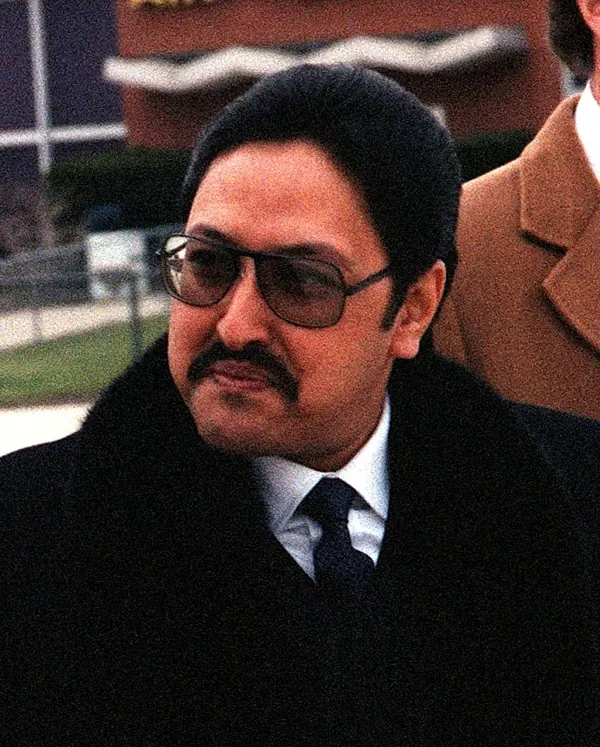
On the evening of 1 June 2001, during a family gathering at Narayanhiti Palace, nine members of Nepal's royal family were shot dead, among them King Birendra, Queen Aishwarya, Prince Nirajan and Princess Shruti.
Read more
A government-appointed inquiry led by the chief justice and the speaker named Crown Prince Dipendra as the gunman, reporting that he had been drinking and had quarrelled with his family over his choice of bride, and that he then shot himself; he died three days later, having been proclaimed king while unconscious. Gyanendra, Birendra's brother, took the throne. The inquiry's account is accepted by many and disbelieved by many others: the speed of the investigation, the absence of a full post-mortem examination and the fact that Gyanendra and his immediate family were not present that night fed conspiracy theories that have never gone away. Whatever happened in the palace, the massacre destroyed the personal standing the monarchy had rebuilt since 1990, and its consequences ran directly into the crisis of 2005.
- 20052061 BSFebruary 2005 – April 2006
King Gyanendra takes direct power
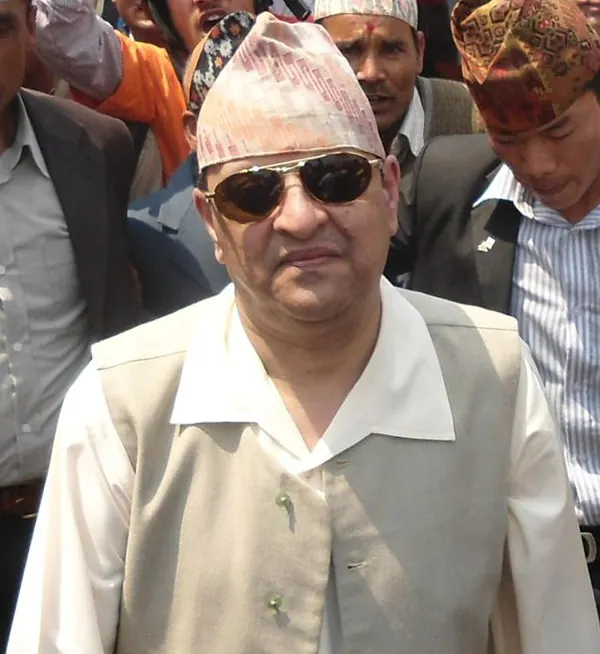
On 1 February 2005 King Gyanendra dismissed the government of Sher Bahadur Deuba, assumed executive power himself and declared a state of emergency, saying the parties had failed to hold elections or end the insurgency and promising to restore peace and multiparty democracy within three years.
Read more
Fundamental rights were suspended, soldiers were posted in newsrooms, telephone and internet links were cut for days, and politicians and journalists were detained or placed under house arrest. India, the United Kingdom and the United States condemned the takeover and suspended military assistance. Rather than isolating the Maoists, it pushed the mainstream parties towards them: in November 2005 the seven parliamentary parties and the CPN (Maoist) signed a twelve-point understanding in Delhi to end both the insurgency and absolute monarchy. It is generally seen as the decisive miscalculation that ended the Nepali monarchy, though views on Gyanendra's motives remain sharply divided.
- 20062062 BSApril 2006
People's Movement II
The Loktantra Andolan of April 2006 was a nationwide general strike and mass mobilisation against King Gyanendra's direct rule, organised by the seven-party alliance with Maoist support under the twelve-point understanding.
Read more
Curfews were imposed and defied; hundreds of thousands marched on the Kathmandu ring road; the security forces killed around nineteen people and injured thousands. Prominent leaders, including the Nepali Congress spokesman Arjun Narsingh K.C., were arrested. After nineteen days the King announced on 24 April that he was reinstating the House of Representatives dissolved in 2002. Parliament met on 28 April, stripped the monarchy of its remaining powers in May, brought the army under civilian control and declared Nepal a secular state. Girija Prasad Koirala became prime minister and opened formal negotiations with the Maoists that led to the peace accord in November. Nineteen days had achieved what fifteen years of parliamentary politics had not, and the movement set the terms for everything that followed.
- 20062063 BS21 November 2006
The Comprehensive Peace Accord
On 21 November 2006 Prime Minister Girija Prasad Koirala and the Maoist chairman Pushpa Kamal Dahal, known as Prachanda, signed the Comprehensive Peace Accord in Kathmandu, formally ending the armed conflict begun in 1996.
Read more
Both sides ended armed mobilisation and recruitment. Maoist combatants moved into temporary cantonments with their weapons stored under United Nations monitoring, matched by the locking away of an equivalent number of Nepal Army weapons. The parties committed to elections for a constituent assembly, to a commission on state restructuring, to a truth and reconciliation commission, to accounting for the disappeared and to ending the King's political role. Implementation proved slow and contested: the integration of former combatants took until 2012, and transitional justice remained largely unfinished nearly two decades later — a continuing grievance for victims' families on all sides. Amendments to the transitional justice laws were finally passed in 2024, and their effect is still being argued over.
The republic and today
The end of the monarchy, a long road to the 2015 constitution, earthquakes and a blockade, and since 2025 a generational shift in Nepal's politics.
- 20072063 BSJanuary – February 2007
Interim constitution and the Madhesh movement
The interim constitution promulgated on 15 January 2007 suspended the King's remaining powers, vested sovereignty wholly in the people, and seated Maoist representatives in an interim legislature alongside the parliamentary parties.
Read more
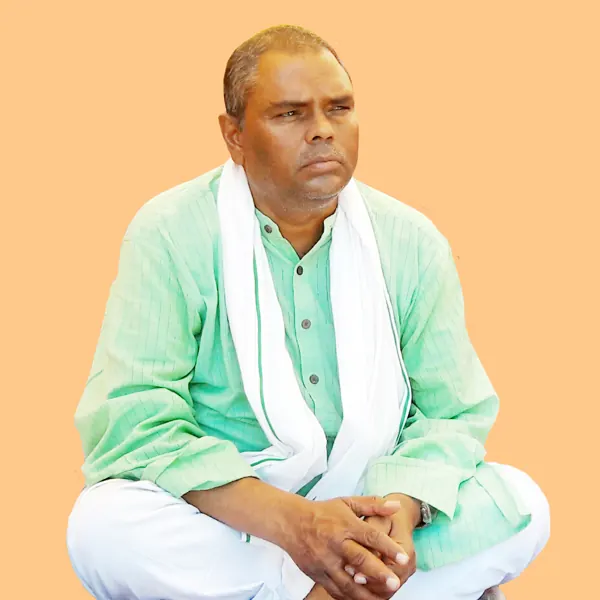
It was drafted by party negotiators rather than an elected body, and objections were immediate: it left out federalism, had weak provisions on proportional representation, and reflected a bargain struck among Kathmandu-based leaders. The day after promulgation activists burned copies of it at Maitighar, and protest spread across the Terai. The Madhesi Janadhikar Forum under Upendra Yadav became the focus of an agitation driven by long-standing grievances — difficulty obtaining citizenship papers, minimal representation in the army, police, civil service and judiciary, and the absence of any commitment to federalism. Around thirty-nine people were killed before a twenty-two point agreement was reached and the constitution amended to commit Nepal to a federal structure. The period also saw serious violence within the Terai, including the killings at Gaur; responsibility for it remains disputed.
- 20082064 BS10 April 2008
Constituent Assembly elected
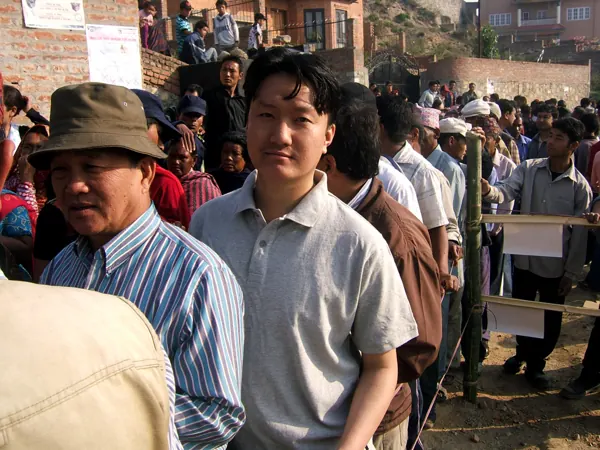
After two postponements, Nepal elected a 601-member Constituent Assembly on 10 April 2008, charged with writing a new constitution and settling the future of the monarchy.
Read more
About sixty per cent of the 17.6 million registered voters took part. The result surprised most observers: the Communist Party of Nepal (Maoist), contesting its first national election two years after laying down arms, won 220 seats, ahead of the Nepali Congress with 110 and the CPN (UML) with 103, with Madhesi and smaller parties taking most of the rest. A mixed system combining constituencies with proportional representation, together with quotas, produced the most socially representative body in Nepali history: roughly a third of members were women, and Dalit, Janajati, Madhesi and Muslim representation rose sharply. Observers judged the poll broadly credible despite intimidation in some districts. Pushpa Kamal Dahal became prime minister in August. With no party close to the two-thirds needed to adopt a constitution, agreement depended on consensus among rivals — and the first assembly never reached it, expiring in May 2012.
- 20082065 BS28 May 2008
Nepal becomes a federal republic
At its first sitting on 28 May 2008 the Constituent Assembly voted to abolish the monarchy and declare Nepal a federal democratic republic. Of the 564 members present, 560 voted in favour and four against.
Read more
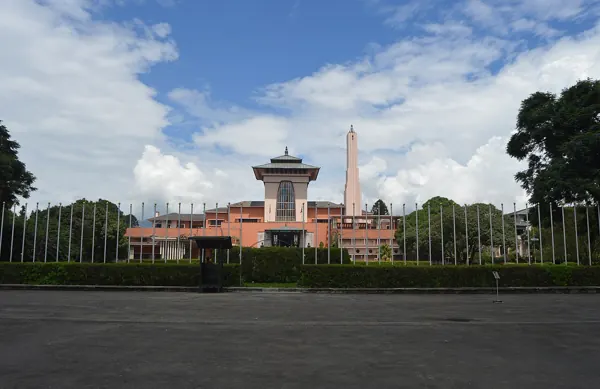
The Shah dynasty had reigned since Prithvi Narayan Shah unified the country in the eighteenth century, and the vote ended 240 years of monarchy in a single sitting, without violence in the capital. Gyanendra was given fifteen days to leave Narayanhiti Palace and moved out on 11 June 2008, retaining private property but no title or constitutional role; the palace opened as a public museum. Ram Baran Yadav was elected the republic's first president in July. Reaction was mixed. For many the declaration completed the work begun in 1951 and confirmed by the peace process; others, including monarchist parties and religious conservatives, argued the decision should have gone to a referendum. The date is marked each year as Republic Day, and monarchist rallies have continued to draw crowds since.
- 20152072 BS25 April 2015
The Gorkha earthquake
At 11:56 on Saturday 25 April 2015 a magnitude 7.8 earthquake struck with its epicentre at Barpak in Gorkha district, about 85 kilometres north-west of Kathmandu. A magnitude 7.3 aftershock followed on 12 May.
Read more
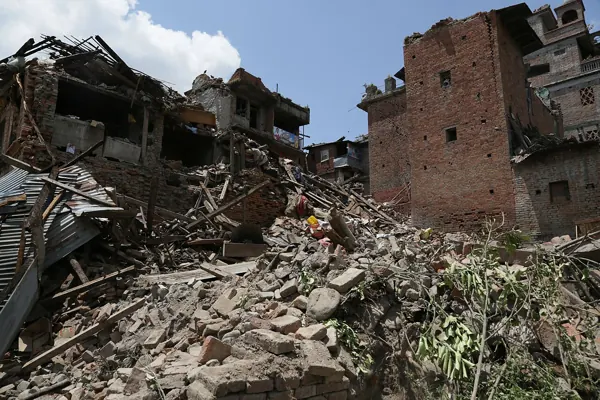
Around 8,970 people were killed and more than 22,000 injured; some 600,000 houses were destroyed and a further 290,000 damaged, and avalanches triggered on Everest and in the Langtang valley killed hundreds more, burying the village of Langtang almost entirely. Centuries-old temples in the Kathmandu, Patan and Bhaktapur durbar squares collapsed, as did the Dharahara tower. The ground motion recorded in Kathmandu was of unusually low frequency, and the timing on a Saturday morning, when many people were outdoors, is thought to have kept the toll lower than it might have been. Reconstruction was slow, contested and heavily dependent on remittances and household borrowing as much as on the reconstruction authority; the disaster also broke the political deadlock that had stalled the constitution for seven years.
- 20152072 BS20 September 2015
A constitution at last — and protest in the Terai
After nearly a decade of deadlock, and five months after the earthquake, the Constituent Assembly promulgated a federal republican constitution on 20 September 2015.
Read more
It was Nepal's first constitution written by elected representatives, and it was welcomed across much of the hills as the closing act of the peace process. In the Terai it was received very differently: Madhesi and Tharu parties argued that the seven-province map split their communities, that constituency delimitation under-weighted the densely populated plains, and that citizenship provisions discriminated against women who married foreign nationals. Protests had begun in August and continued for months. Human Rights Watch documented 25 deaths in five Terai districts between 24 August and 11 September alone, including sixteen civilians and nine police officers; by early 2016 more than fifty people had died. The government said it faced violent agitation; protesters and rights groups said police used excessive and at times lethal force. Accountability for those deaths remains largely unresolved.
- 20152072 BSSeptember 2015 – February 2016
The border blockade
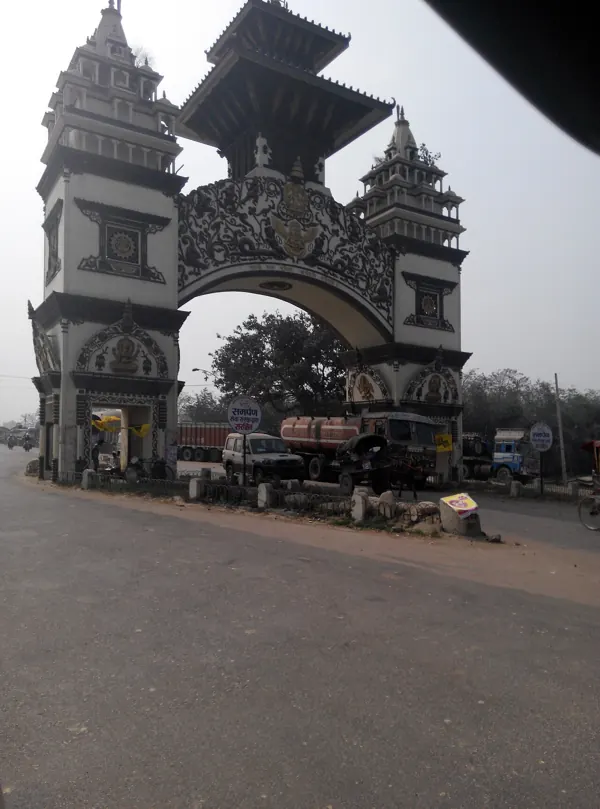
Within days of the constitution's promulgation, freight movement across Nepal's main southern border crossings largely stopped.
Read more
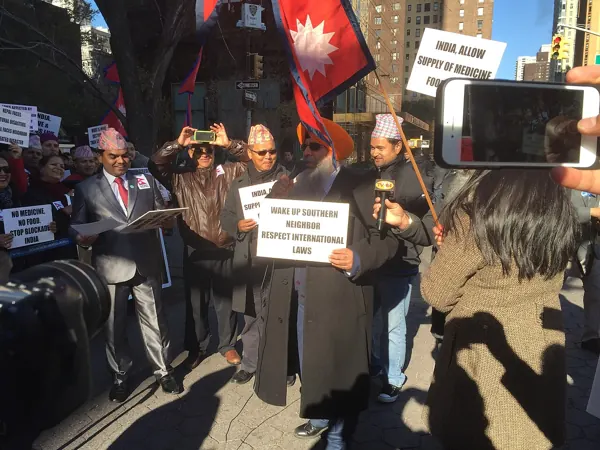
Madhesi parties maintained sit-ins at the crossings; Nepal's government and much of its public accused India of enforcing an undeclared blockade in support of those demands, pointing to lorries held back on the Indian side. Delhi denied imposing any blockade, attributing the stoppage to Nepali protests and security concerns. The effect on a landlocked country still recovering from the earthquake was severe: petrol and cooking gas rationing, grounded flights, closed schools and factories, shortages of medicines and vaccines, and a black market in fuel. Losses were widely estimated at around a billion dollars. Nepal signed transit and petroleum agreements with China during the crisis, a shift many analysts saw as lasting. Parliament passed a first constitutional amendment on representation and delimitation in January 2016, and the Madhesi front withdrew its border obstruction on 8 February 2016, though its wider agitation continued.
- 20172074 BS2017
Federalism goes to the polls
Nepal held local elections in three phases in May, June and September 2017 — the first at that level in twenty years and the first ever under the federal constitution — filling 753 newly created local units with substantial money and authority devolved to them.
Read more
Turnout ran between 73 and 77 per cent, and quota rules requiring women candidates for mayor or deputy mayor produced a large increase in elected women, though mostly as deputies. The third phase covered Province 2 after Madhesi parties, having threatened a boycott, agreed to take part. Provincial and federal elections followed on 26 November and 7 December. CPN-UML and the Maoist Centre fought them as a left alliance and won decisively: 121 seats for the UML and 53 for the Maoist Centre against 63 for the Nepali Congress in the 275-seat House. In 2018 the two merged into the Nepal Communist Party, giving KP Sharma Oli the strongest government since the end of the monarchy. The stability did not last three years.
- 20202077 BSDecember 2020 – July 2021
Parliament dissolved twice, courts restore it
The 2017 mandate collapsed into a constitutional crisis.
Read more
Amid a feud with Pushpa Kamal Dahal inside the Nepal Communist Party, Prime Minister KP Sharma Oli recommended dissolving the House of Representatives on 20 December 2020 and called early elections. The Supreme Court reinstated parliament in February 2021, ruling the dissolution unconstitutional; a separate ruling in March unwound the 2018 merger, restoring the UML and the Maoist Centre as separate parties. Oli dissolved the House a second time in May 2021. In July the Supreme Court struck that down too and took the unusual step of ordering that Nepali Congress president Sher Bahadur Deuba be appointed prime minister, which happened on 13 July. Oli's supporters called the judgment judicial overreach; his opponents called it the constitution working as intended. Either way the episode established that the House could not be dissolved at a prime minister's convenience, and it left Nepal's parties fragmented and its public increasingly contemptuous of all of them.
- 20212078 BSAugust 2021
Gurkha veterans on hunger strike in London
Three Gurkha veterans — Gyanraj Rai, Dhan Gurung and Pushpa Rana Ghale, campaigning as Gurkha Satyagraha — began a hunger strike outside Downing Street on 7 August 2021 over pension inequality.
Read more
Gurkhas who retired before 1 July 1997 receive the Gurkha Pension Scheme, which pays substantially less than the Armed Forces Pension Scheme available to their British counterparts and to Gurkhas serving later. The UK government has defended the distinction on the grounds that the older scheme was designed for retirement in Nepal, where costs were lower, and that transferring pre-1997 service would be very expensive; veterans argue it treats equal service unequally. The strike lasted twelve days, ending on 19 August after one participant was taken to hospital and ministers agreed to bilateral talks with Nepal. A UK-Nepal committee met from December 2021 and a petition with more than 106,000 signatures was debated in Parliament. The core pension question remains unresolved, and the campaign continues among Britain's Nepali communities.
- 20222079 BS2022
New parties break the old duopoly
Balendra Shah, a 32-year-old structural engineer better known as the rapper Balen, was elected mayor of Kathmandu on 13 May 2022 standing as an independent, taking 61,767 votes against about 38,000 each for the Nepali Congress and UML candidates in a city both parties had treated as safe.
Read more
His campaign ran largely online, with little money and no party machine, on waste management, unauthorised construction, river pollution and disgust at established politics; independents also won in Dharan, Janakpur and elsewhere. At the federal election on 20 November no party came close to a majority: the Nepali Congress took 89 seats, the UML 78 and the Maoist Centre 32, while the Rastriya Swatantra Party, founded five months earlier by the broadcaster Rabi Lamichhane, won 20 seats and about eleven per cent of the proportional vote. Government formation then became a revolving door, with Pushpa Kamal Dahal surviving by repeatedly switching partners. The appetite for new politics was real; the stability was not.
- 20232080 BS3 November 2023
The Jajarkot earthquake
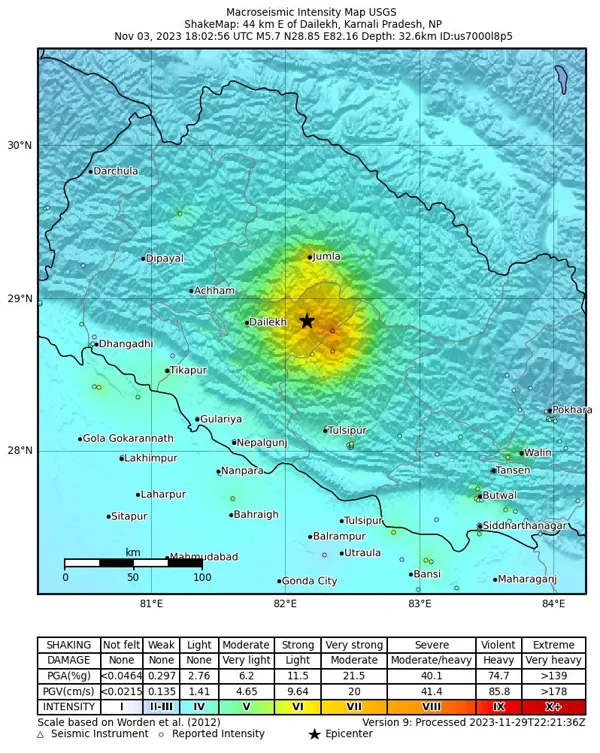
An earthquake struck Jajarkot district in Karnali province late on the night of 3 November 2023, at 23:47 Nepal time.
Read more
Nepal's National Earthquake Monitoring and Research Centre put it at magnitude 6.4; the US Geological Survey recorded 5.7. Its shallow depth and the hour meant people were asleep in stone-and-mud houses that collapsed easily. At least 153 people were killed — 101 in Jajarkot and 52 in Rukum West — and around 375 were injured. Tens of thousands of homes were damaged or destroyed across some of the poorest districts in the country; in one municipality near the epicentre almost all 3,500 houses were damaged even though nobody died there. Survivors spent the Himalayan winter in tents and tarpaulins. Reconstruction was slow and much criticised: a detailed damage survey did not begin until February 2025, fifteen months after the earthquake, and many families were still without permanent housing long after aid pledges were announced.
- 20242081 BS26–28 September 2024
Record rains drown the Kathmandu Valley
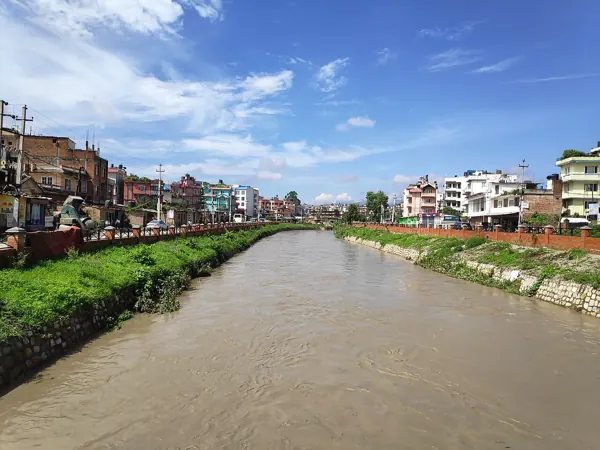
A late monsoon low-pressure system stalled over central and eastern Nepal from 26 to 28 September 2024, producing what the government described as the heaviest rainfall in its recorded history.
Read more
The Kathmandu Valley took around 240mm in three days, its worst downpour since 2002, and some stations recorded over 320mm. The Bagmati and its tributaries burst their banks, submerging southern Kathmandu, while landslides buried vehicles on the highways out of the valley. At least 240 people were killed nationwide, with the government's consolidated figure near 250 dead, 18 missing and 178 injured; 44 of Nepal's 77 districts were affected and roughly 4,700 houses destroyed. Meteorologists linked the intensity to a warming atmosphere holding more moisture, but Nepali urban planners stressed that the damage in Kathmandu was also man-made: decades of building on floodplains, narrowing the rivers, and drainage never upgraded for the city's growth. As one specialist put it, climate change should not be used to hide poor river management.
- 20252082 BS8–9 September 2025
The Gen Z uprising
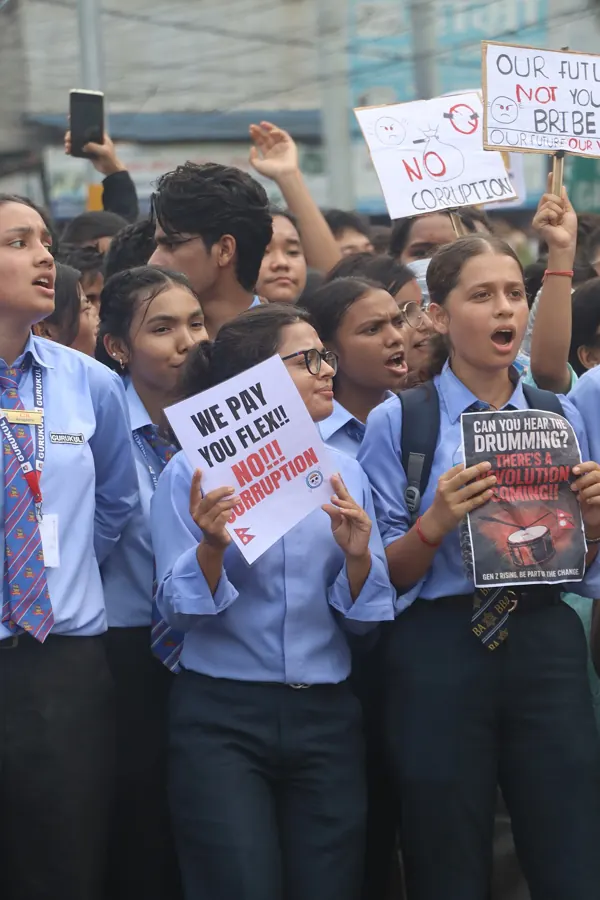
On 4 September 2025 the government blocked 26 social media platforms, including Facebook, Instagram, WhatsApp and YouTube, for failing to register with the ministry of communications.
Read more
The ban lit a fire laid by years of anger over corruption, joblessness, mass labour migration and the visible wealth of politicians' children. On 8 September tens of thousands of mostly young protesters marched on the parliament complex at New Baneshwar. Police fired live ammunition; nineteen people were killed that day, with pathologists later recording deaths from high-velocity gunshot wounds to the head, neck, chest and abdomen. The ban was lifted overnight, but on 9 September crowds returned and the state lost control of Kathmandu. Parliament, Singha Durbar, the Supreme Court, the presidential and prime ministerial residences, party headquarters, media offices and politicians' homes were burned, and prisons broken open. Three police officers were beaten to death and six people died in a burning supermarket. KP Sharma Oli resigned on 9 September. The final toll is generally given as at least 76 dead.
- 20252082 BS12 September 2025
Sushila Karki, first woman prime minister
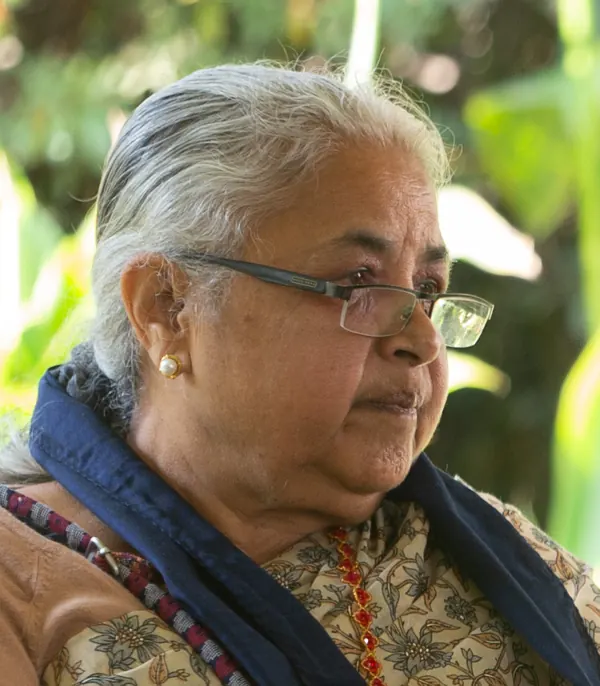
Sushila Karki, 73, was sworn in as interim prime minister late on 12 September 2025 — the first woman to head a government in Nepal's history.
Read more
A former chief justice, herself the first woman in that post, she was known for anti-corruption rulings and had no party affiliation. Her selection was extraordinary in form as well as substance: with no organised leadership, protest groups including Hami Nepal debated candidates on a public Discord server that drew roughly 10,000 participants, diaspora Nepalis among them, before converging on her name. President Ram Chandra Paudel dissolved the House of Representatives the same day and set elections for 5 March 2026. The legality was immediately contested — the CPN-UML argued the appointment and dissolution had no basis in Article 76 of the constitution, since Karki was not a member of parliament — while supporters argued no constitutional route existed for a parliament that had lost public consent. She governed for just under six months and delivered the election on schedule.
- 20262082 BS5 March 2026
A landslide election ends the old order
Nepal voted on 5 March 2026 in an election the interim government delivered on schedule despite widespread doubt that it could. Turnout was about 60 per cent, the lowest since 1991, from an electorate of 18.9 million.
Read more
The result was the most lopsided in Nepal's democratic history: the Rastriya Swatantra Party won 182 of 275 seats in the House of Representatives, roughly two-thirds. The Nepali Congress fell to 38 and the CPN-UML to 25, with a further 17 going to another communist party, seven to the Shram Sanskriti Party, five to the Rastriya Prajatantra Party and one to an independent. Balendra Shah defeated KP Sharma Oli in Oli's own constituency, and Oli publicly congratulated him. Around 52 per cent of voters were aged between 18 and 40. Sushila Karki, who had faced sustained legal and political challenge throughout her tenure, said after voting that her duty was completed; her handling of the transition drew broad, though not universal, praise.
- 20262082 BS27 March 2026
Balen Shah sworn in at 35
Balendra Shah took the oath of office on 27 March 2026, becoming at 35 the youngest democratically elected prime minister in Nepal's history, four years after entering politics as an independent mayoral candidate.
Read more
His government moved fast and divisively. Within a day it arrested former prime minister KP Sharma Oli and former home minister Ramesh Lekhak over alleged negligence during the September 2025 killings; both were bailed within days without charges being filed. It dissolved twelve party-affiliated civil service unions, annulled more than 1,200 political appointments, cut the number of federal ministries from 22 to 18, and set up a property investigation commission that gathered over 11,000 asset declarations. Critics raised substantial concerns: remarks by Shah in May about the India border caused a diplomatic row, courts ordered the deletion of published articles in press cases, he was faulted for avoiding parliament, and unelected advisers were said to wield outsized influence. Investment confidence remained weak. The opposition called the government immature; its supporters called it overdue.
- 20262083 BS26 August 2026
Himalayan flood devastates the Trishuli valley
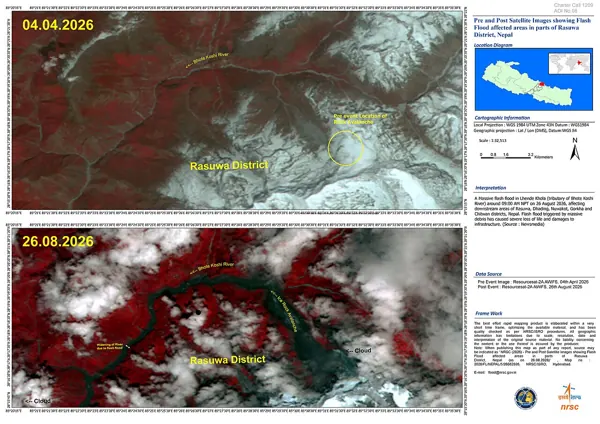
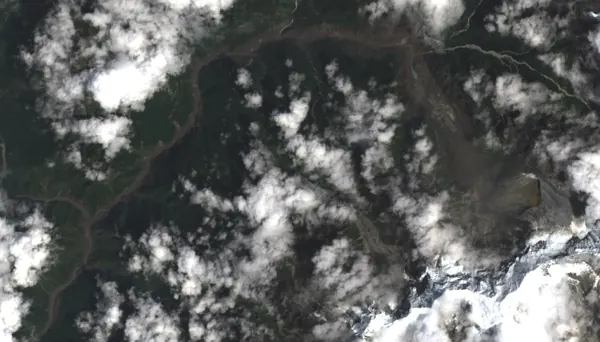
On the morning of 26 August 2026 a huge mass of rock and ice broke away at around 5,000 metres in the Langtang region on the Nepal-Tibet border.
Read more
The US Geological Survey recorded the collapse as seismic energy equivalent to a magnitude 5.2 earthquake, and it remains unclear whether the failure began as a landslide incorporating glacier ice or as a glacial collapse. The debris briefly dammed the Lhende river; when the blockage gave way, a wall of water and rock ran nearly 100km down the Bhote Koshi and Trishuli, reportedly raising the Trishuli by nine metres in half an hour. Rasuwa, Nuwakot and Dhading were worst hit, along with Gyirong county in Tibet. By 2 September Nepali authorities reported at least 1,114 dead and 3,916 missing, with 16 dead and 546 missing on the Chinese side; many of the missing were hydropower workers and foreign trekkers. Damage was estimated above four billion dollars. A similar, smaller outburst had destroyed the Rasuwagadhi border crossing in the same valley in July 2025.
- 20262083 BSSeptember 2026
Counting the cost, and the questions that follow
A week after the flood, Nepal is running its largest relief operation since the 2015 earthquake, and the disaster has become the country's deadliest since then.
Read more
More than 21,000 police, army and armed police personnel have been deployed, over 10,000 people rescued including 252 foreign nationals, and medical treatment given to at least 4,070. A flood emergency has been declared in fifteen municipalities. Access remains the central problem, with the highway from Kathmandu passable only as far as Nuwakot. The UN reports around 65,000 people needing emergency water and sanitation and more than 22,000 children needing protection; 48 suspension bridges are damaged, 28 needing full replacement. Prime Minister Balen Shah has released about 6.5 million dollars and shifted the operation from rescue towards rehabilitation. Two arguments dominate: whether adequate warning could have crossed the border from China in time, an issue already raised after the July 2025 flood in the same valley, and how far a warming Himalaya makes such events more likely. Figures are still moving.

Nepal, explained for Nepalis abroad. The week's news from Nepal, plus guides on citizenship, passports and land, free every Friday.
Subscribe free