

The republic and today
The end of the monarchy, a long road to the 2015 constitution, earthquakes and a blockade, and since 2025 a generational shift in Nepal's politics.
- 18 events
- 2007 – now
- The whole timeline
The republic and today
The end of the monarchy, a long road to the 2015 constitution, earthquakes and a blockade, and since 2025 a generational shift in Nepal's politics.
- 20072063 BSJanuary – February 2007
Interim constitution and the Madhesh movement
The interim constitution promulgated on 15 January 2007 suspended the King's remaining powers, vested sovereignty wholly in the people, and seated Maoist representatives in an interim legislature alongside the parliamentary parties.
Read more
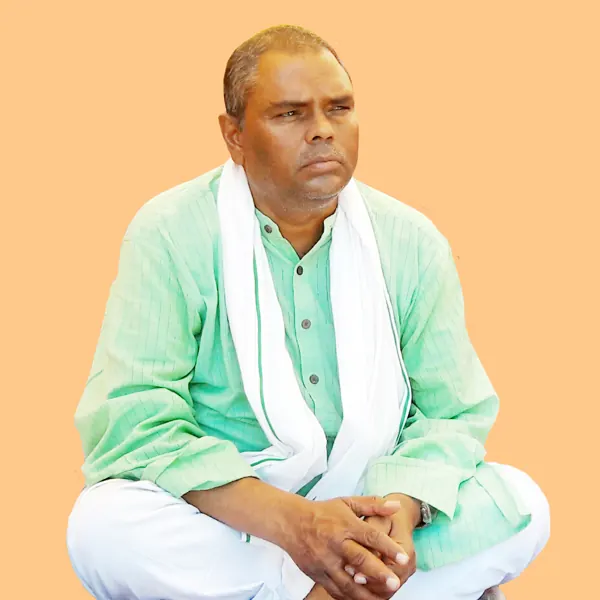
It was drafted by party negotiators rather than an elected body, and objections were immediate: it left out federalism, had weak provisions on proportional representation, and reflected a bargain struck among Kathmandu-based leaders. The day after promulgation activists burned copies of it at Maitighar, and protest spread across the Terai. The Madhesi Janadhikar Forum under Upendra Yadav became the focus of an agitation driven by long-standing grievances — difficulty obtaining citizenship papers, minimal representation in the army, police, civil service and judiciary, and the absence of any commitment to federalism. Around thirty-nine people were killed before a twenty-two point agreement was reached and the constitution amended to commit Nepal to a federal structure. The period also saw serious violence within the Terai, including the killings at Gaur; responsibility for it remains disputed.
- 20082064 BS10 April 2008
Constituent Assembly elected
After two postponements, Nepal elected a 601-member Constituent Assembly on 10 April 2008, charged with writing a new constitution and settling the future of the monarchy.
Read more
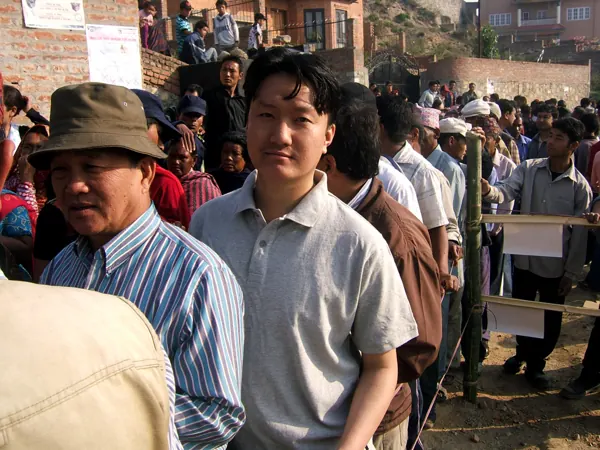
About sixty per cent of the 17.6 million registered voters took part. The result surprised most observers: the Communist Party of Nepal (Maoist), contesting its first national election two years after laying down arms, won 220 seats, ahead of the Nepali Congress with 110 and the CPN (UML) with 103, with Madhesi and smaller parties taking most of the rest. A mixed system combining constituencies with proportional representation, together with quotas, produced the most socially representative body in Nepali history: roughly a third of members were women, and Dalit, Janajati, Madhesi and Muslim representation rose sharply. Observers judged the poll broadly credible despite intimidation in some districts. Pushpa Kamal Dahal became prime minister in August. With no party close to the two-thirds needed to adopt a constitution, agreement depended on consensus among rivals — and the first assembly never reached it, expiring in May 2012.
- 20082065 BS28 May 2008
Nepal becomes a federal republic
At its first sitting on 28 May 2008 the Constituent Assembly voted to abolish the monarchy and declare Nepal a federal democratic republic. Of the 564 members present, 560 voted in favour and four against.
Read more
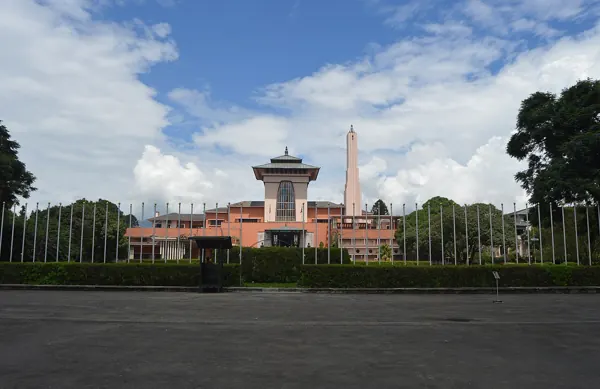
The Shah dynasty had reigned since Prithvi Narayan Shah unified the country in the eighteenth century, and the vote ended 240 years of monarchy in a single sitting, without violence in the capital. Gyanendra was given fifteen days to leave Narayanhiti Palace and moved out on 11 June 2008, retaining private property but no title or constitutional role; the palace opened as a public museum. Ram Baran Yadav was elected the republic's first president in July. Reaction was mixed. For many the declaration completed the work begun in 1951 and confirmed by the peace process; others, including monarchist parties and religious conservatives, argued the decision should have gone to a referendum. The date is marked each year as Republic Day, and monarchist rallies have continued to draw crowds since.
- 20152072 BS25 April 2015
The Gorkha earthquake
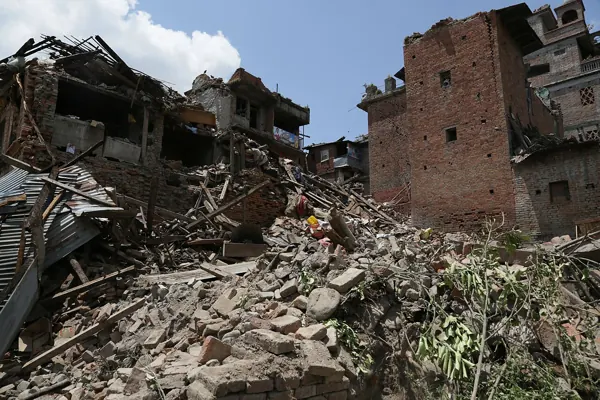
At 11:56 on Saturday 25 April 2015 a magnitude 7.8 earthquake struck with its epicentre at Barpak in Gorkha district, about 85 kilometres north-west of Kathmandu. A magnitude 7.3 aftershock followed on 12 May.
Read more
Around 8,970 people were killed and more than 22,000 injured; some 600,000 houses were destroyed and a further 290,000 damaged, and avalanches triggered on Everest and in the Langtang valley killed hundreds more, burying the village of Langtang almost entirely. Centuries-old temples in the Kathmandu, Patan and Bhaktapur durbar squares collapsed, as did the Dharahara tower. The ground motion recorded in Kathmandu was of unusually low frequency, and the timing on a Saturday morning, when many people were outdoors, is thought to have kept the toll lower than it might have been. Reconstruction was slow, contested and heavily dependent on remittances and household borrowing as much as on the reconstruction authority; the disaster also broke the political deadlock that had stalled the constitution for seven years.
- 20152072 BS20 September 2015
A constitution at last — and protest in the Terai
After nearly a decade of deadlock, and five months after the earthquake, the Constituent Assembly promulgated a federal republican constitution on 20 September 2015.
Read more
It was Nepal's first constitution written by elected representatives, and it was welcomed across much of the hills as the closing act of the peace process. In the Terai it was received very differently: Madhesi and Tharu parties argued that the seven-province map split their communities, that constituency delimitation under-weighted the densely populated plains, and that citizenship provisions discriminated against women who married foreign nationals. Protests had begun in August and continued for months. Human Rights Watch documented 25 deaths in five Terai districts between 24 August and 11 September alone, including sixteen civilians and nine police officers; by early 2016 more than fifty people had died. The government said it faced violent agitation; protesters and rights groups said police used excessive and at times lethal force. Accountability for those deaths remains largely unresolved.
- 20152072 BSSeptember 2015 – February 2016
The border blockade
Within days of the constitution's promulgation, freight movement across Nepal's main southern border crossings largely stopped.
Read more
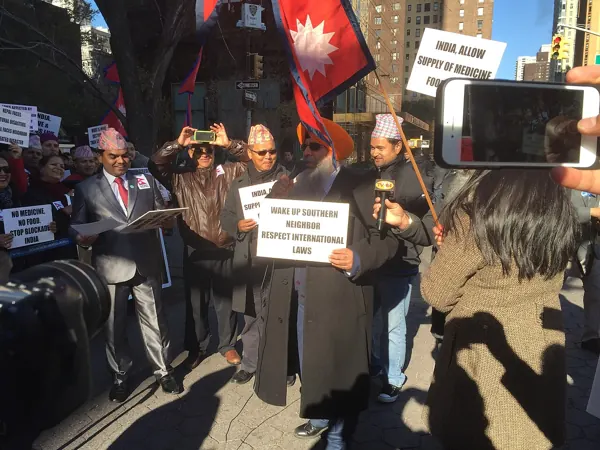
Madhesi parties maintained sit-ins at the crossings; Nepal's government and much of its public accused India of enforcing an undeclared blockade in support of those demands, pointing to lorries held back on the Indian side. Delhi denied imposing any blockade, attributing the stoppage to Nepali protests and security concerns. The effect on a landlocked country still recovering from the earthquake was severe: petrol and cooking gas rationing, grounded flights, closed schools and factories, shortages of medicines and vaccines, and a black market in fuel. Losses were widely estimated at around a billion dollars. Nepal signed transit and petroleum agreements with China during the crisis, a shift many analysts saw as lasting. Parliament passed a first constitutional amendment on representation and delimitation in January 2016, and the Madhesi front withdrew its border obstruction on 8 February 2016, though its wider agitation continued.
- 20172074 BS2017
Federalism goes to the polls
Nepal held local elections in three phases in May, June and September 2017 — the first at that level in twenty years and the first ever under the federal constitution — filling 753 newly created local units with substantial money and authority devolved to them.
Read more
Turnout ran between 73 and 77 per cent, and quota rules requiring women candidates for mayor or deputy mayor produced a large increase in elected women, though mostly as deputies. The third phase covered Province 2 after Madhesi parties, having threatened a boycott, agreed to take part. Provincial and federal elections followed on 26 November and 7 December. CPN-UML and the Maoist Centre fought them as a left alliance and won decisively: 121 seats for the UML and 53 for the Maoist Centre against 63 for the Nepali Congress in the 275-seat House. In 2018 the two merged into the Nepal Communist Party, giving KP Sharma Oli the strongest government since the end of the monarchy. The stability did not last three years.
- 20202077 BSDecember 2020 – July 2021
Parliament dissolved twice, courts restore it
The 2017 mandate collapsed into a constitutional crisis.
Read more
Amid a feud with Pushpa Kamal Dahal inside the Nepal Communist Party, Prime Minister KP Sharma Oli recommended dissolving the House of Representatives on 20 December 2020 and called early elections. The Supreme Court reinstated parliament in February 2021, ruling the dissolution unconstitutional; a separate ruling in March unwound the 2018 merger, restoring the UML and the Maoist Centre as separate parties. Oli dissolved the House a second time in May 2021. In July the Supreme Court struck that down too and took the unusual step of ordering that Nepali Congress president Sher Bahadur Deuba be appointed prime minister, which happened on 13 July. Oli's supporters called the judgment judicial overreach; his opponents called it the constitution working as intended. Either way the episode established that the House could not be dissolved at a prime minister's convenience, and it left Nepal's parties fragmented and its public increasingly contemptuous of all of them.
- 20212078 BSAugust 2021
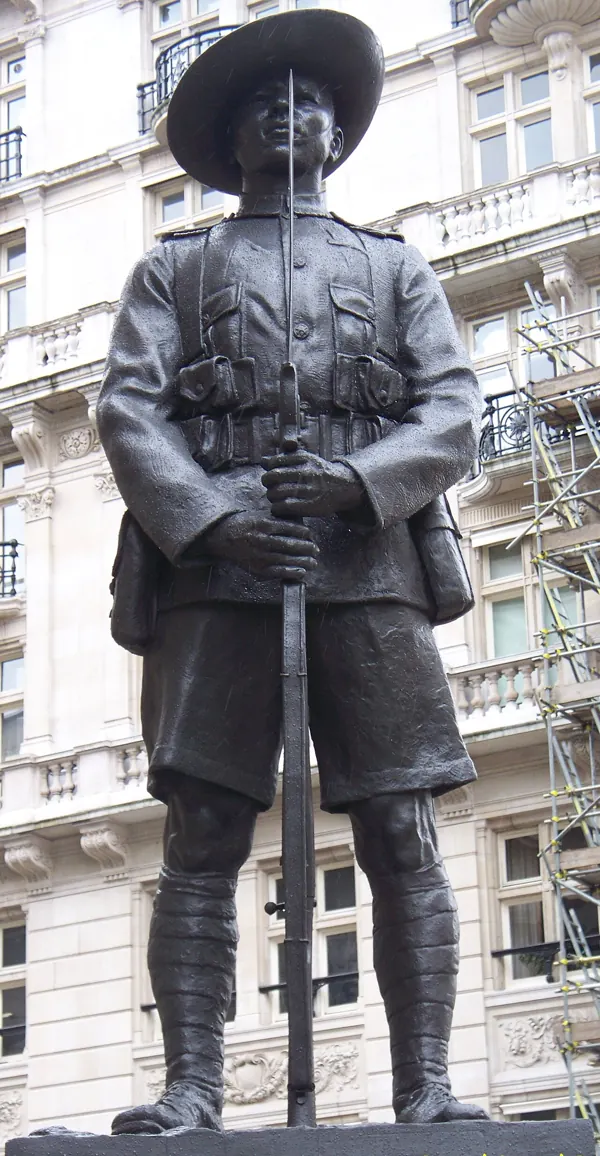
Gurkha veterans on hunger strike in London
Three Gurkha veterans — Gyanraj Rai, Dhan Gurung and Pushpa Rana Ghale, campaigning as Gurkha Satyagraha — began a hunger strike outside Downing Street on 7 August 2021 over pension inequality.
Read more
Gurkhas who retired before 1 July 1997 receive the Gurkha Pension Scheme, which pays substantially less than the Armed Forces Pension Scheme available to their British counterparts and to Gurkhas serving later. The UK government has defended the distinction on the grounds that the older scheme was designed for retirement in Nepal, where costs were lower, and that transferring pre-1997 service would be very expensive; veterans argue it treats equal service unequally. The strike lasted twelve days, ending on 19 August after one participant was taken to hospital and ministers agreed to bilateral talks with Nepal. A UK-Nepal committee met from December 2021 and a petition with more than 106,000 signatures was debated in Parliament. The core pension question remains unresolved, and the campaign continues among Britain's Nepali communities.
- 20222079 BS2022
New parties break the old duopoly
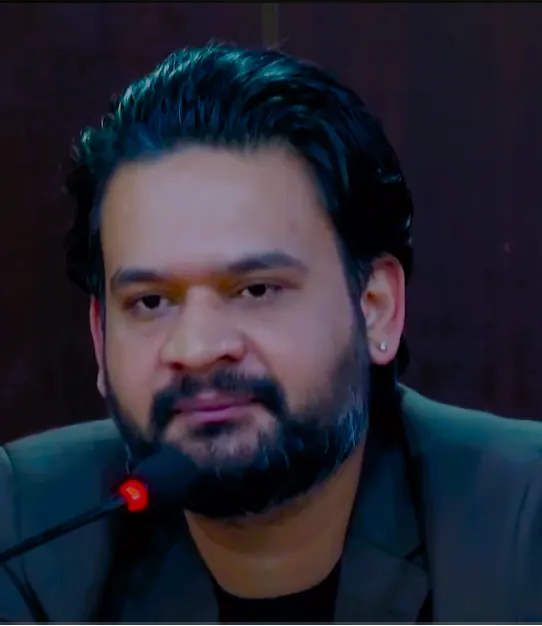
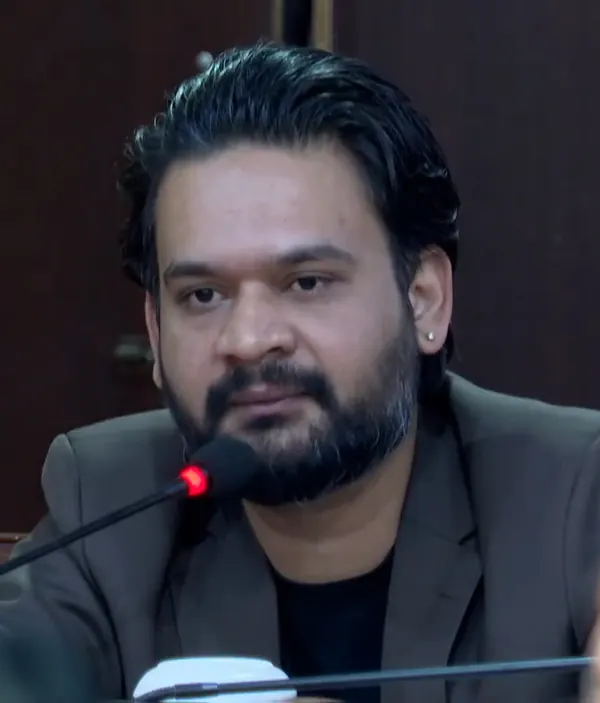
Balendra Shah, a 32-year-old structural engineer better known as the rapper Balen, was elected mayor of Kathmandu on 13 May 2022 standing as an independent, taking 61,767 votes against about 38,000 each for the Nepali Congress and UML candidates in a city both parties had treated as safe.
Read more
His campaign ran largely online, with little money and no party machine, on waste management, unauthorised construction, river pollution and disgust at established politics; independents also won in Dharan, Janakpur and elsewhere. At the federal election on 20 November no party came close to a majority: the Nepali Congress took 89 seats, the UML 78 and the Maoist Centre 32, while the Rastriya Swatantra Party, founded five months earlier by the broadcaster Rabi Lamichhane, won 20 seats and about eleven per cent of the proportional vote. Government formation then became a revolving door, with Pushpa Kamal Dahal surviving by repeatedly switching partners. The appetite for new politics was real; the stability was not.
- 20232080 BS3 November 2023
The Jajarkot earthquake
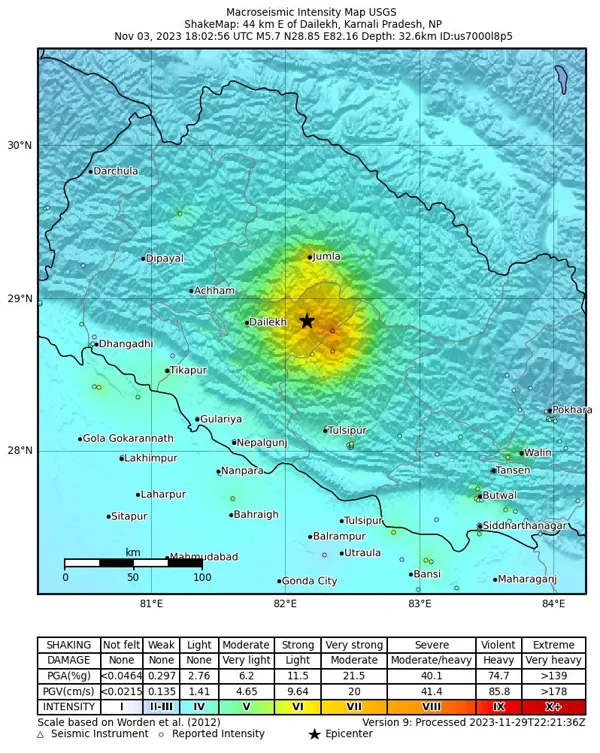
An earthquake struck Jajarkot district in Karnali province late on the night of 3 November 2023, at 23:47 Nepal time.
Read more
Nepal's National Earthquake Monitoring and Research Centre put it at magnitude 6.4; the US Geological Survey recorded 5.7. Its shallow depth and the hour meant people were asleep in stone-and-mud houses that collapsed easily. At least 153 people were killed — 101 in Jajarkot and 52 in Rukum West — and around 375 were injured. Tens of thousands of homes were damaged or destroyed across some of the poorest districts in the country; in one municipality near the epicentre almost all 3,500 houses were damaged even though nobody died there. Survivors spent the Himalayan winter in tents and tarpaulins. Reconstruction was slow and much criticised: a detailed damage survey did not begin until February 2025, fifteen months after the earthquake, and many families were still without permanent housing long after aid pledges were announced.
- 20242081 BS26–28 September 2024
Record rains drown the Kathmandu Valley
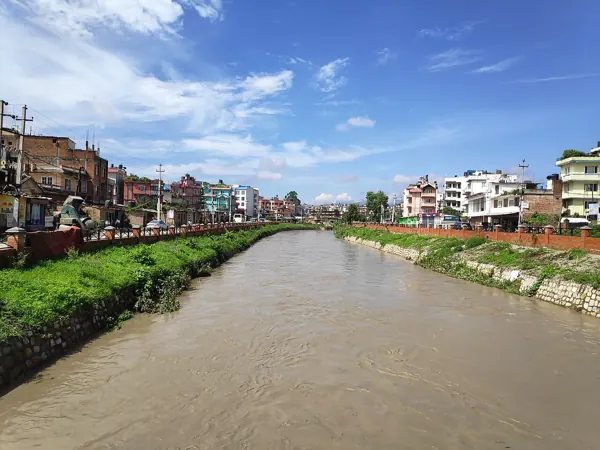
A late monsoon low-pressure system stalled over central and eastern Nepal from 26 to 28 September 2024, producing what the government described as the heaviest rainfall in its recorded history.
Read more
The Kathmandu Valley took around 240mm in three days, its worst downpour since 2002, and some stations recorded over 320mm. The Bagmati and its tributaries burst their banks, submerging southern Kathmandu, while landslides buried vehicles on the highways out of the valley. At least 240 people were killed nationwide, with the government's consolidated figure near 250 dead, 18 missing and 178 injured; 44 of Nepal's 77 districts were affected and roughly 4,700 houses destroyed. Meteorologists linked the intensity to a warming atmosphere holding more moisture, but Nepali urban planners stressed that the damage in Kathmandu was also man-made: decades of building on floodplains, narrowing the rivers, and drainage never upgraded for the city's growth. As one specialist put it, climate change should not be used to hide poor river management.
- 20252082 BS8–9 September 2025
The Gen Z uprising
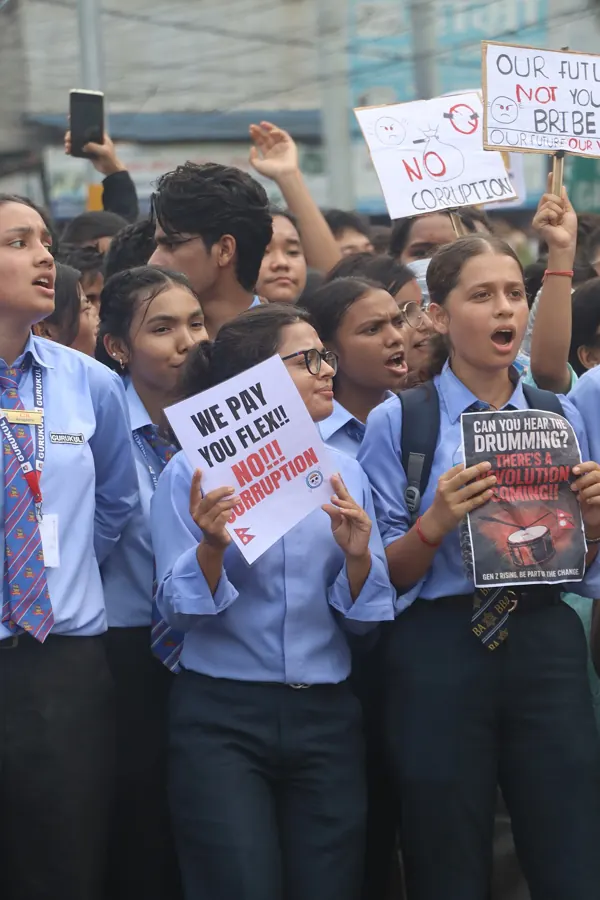
On 4 September 2025 the government blocked 26 social media platforms, including Facebook, Instagram, WhatsApp and YouTube, for failing to register with the ministry of communications.
Read more
The ban lit a fire laid by years of anger over corruption, joblessness, mass labour migration and the visible wealth of politicians' children. On 8 September tens of thousands of mostly young protesters marched on the parliament complex at New Baneshwar. Police fired live ammunition; nineteen people were killed that day, with pathologists later recording deaths from high-velocity gunshot wounds to the head, neck, chest and abdomen. The ban was lifted overnight, but on 9 September crowds returned and the state lost control of Kathmandu. Parliament, Singha Durbar, the Supreme Court, the presidential and prime ministerial residences, party headquarters, media offices and politicians' homes were burned, and prisons broken open. Three police officers were beaten to death and six people died in a burning supermarket. KP Sharma Oli resigned on 9 September. The final toll is generally given as at least 76 dead.
- 20252082 BS12 September 2025
Sushila Karki, first woman prime minister
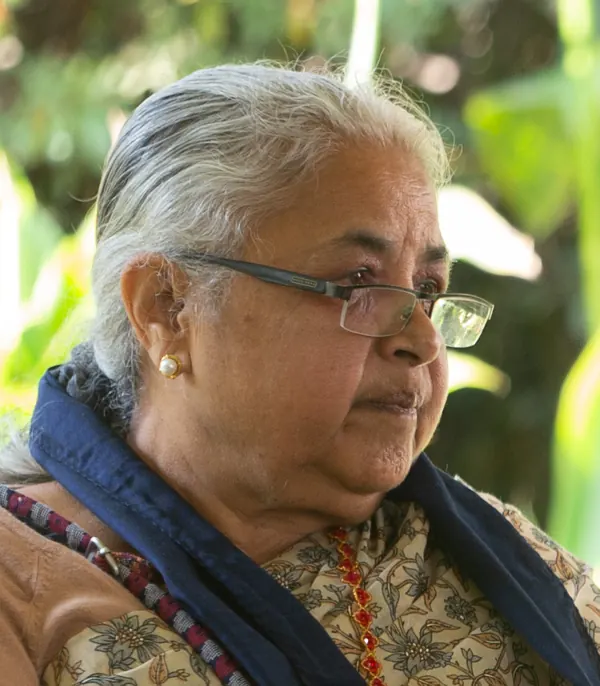
Sushila Karki, 73, was sworn in as interim prime minister late on 12 September 2025 — the first woman to head a government in Nepal's history.
Read more
A former chief justice, herself the first woman in that post, she was known for anti-corruption rulings and had no party affiliation. Her selection was extraordinary in form as well as substance: with no organised leadership, protest groups including Hami Nepal debated candidates on a public Discord server that drew roughly 10,000 participants, diaspora Nepalis among them, before converging on her name. President Ram Chandra Paudel dissolved the House of Representatives the same day and set elections for 5 March 2026. The legality was immediately contested — the CPN-UML argued the appointment and dissolution had no basis in Article 76 of the constitution, since Karki was not a member of parliament — while supporters argued no constitutional route existed for a parliament that had lost public consent. She governed for just under six months and delivered the election on schedule.
- 20262082 BS5 March 2026
A landslide election ends the old order
Nepal voted on 5 March 2026 in an election the interim government delivered on schedule despite widespread doubt that it could. Turnout was about 60 per cent, the lowest since 1991, from an electorate of 18.9 million.
Read more
The result was the most lopsided in Nepal's democratic history: the Rastriya Swatantra Party won 182 of 275 seats in the House of Representatives, roughly two-thirds. The Nepali Congress fell to 38 and the CPN-UML to 25, with a further 17 going to another communist party, seven to the Shram Sanskriti Party, five to the Rastriya Prajatantra Party and one to an independent. Balendra Shah defeated KP Sharma Oli in Oli's own constituency, and Oli publicly congratulated him. Around 52 per cent of voters were aged between 18 and 40. Sushila Karki, who had faced sustained legal and political challenge throughout her tenure, said after voting that her duty was completed; her handling of the transition drew broad, though not universal, praise.
- 20262082 BS27 March 2026
Balen Shah sworn in at 35
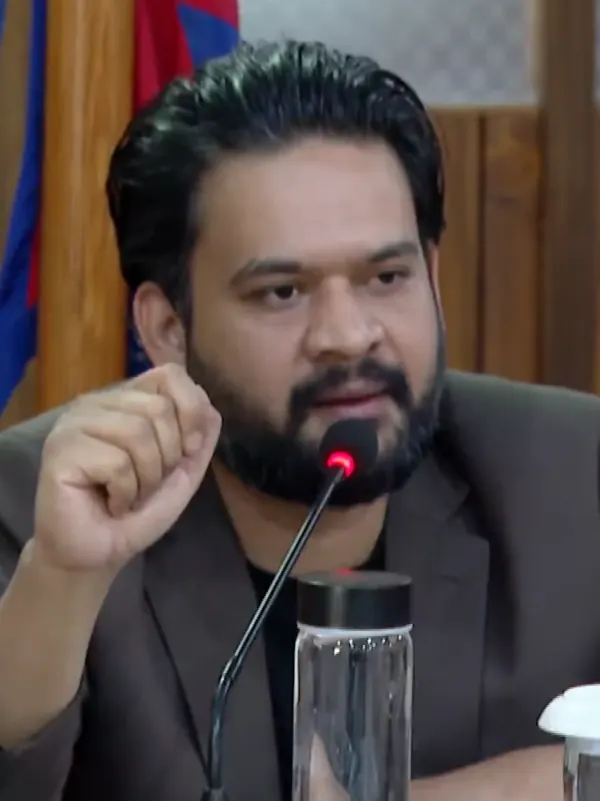
Balendra Shah took the oath of office on 27 March 2026, becoming at 35 the youngest democratically elected prime minister in Nepal's history, four years after entering politics as an independent mayoral candidate.
Read more
His government moved fast and divisively. Within a day it arrested former prime minister KP Sharma Oli and former home minister Ramesh Lekhak over alleged negligence during the September 2025 killings; both were bailed within days without charges being filed. It dissolved twelve party-affiliated civil service unions, annulled more than 1,200 political appointments, cut the number of federal ministries from 22 to 18, and set up a property investigation commission that gathered over 11,000 asset declarations. Critics raised substantial concerns: remarks by Shah in May about the India border caused a diplomatic row, courts ordered the deletion of published articles in press cases, he was faulted for avoiding parliament, and unelected advisers were said to wield outsized influence. Investment confidence remained weak. The opposition called the government immature; its supporters called it overdue.
- 20262083 BS26 August 2026
Himalayan flood devastates the Trishuli valley
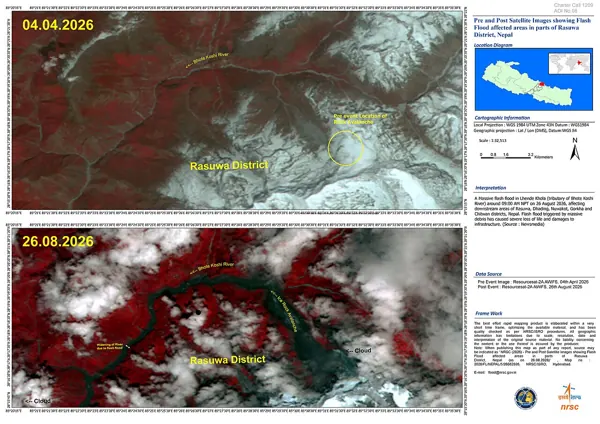
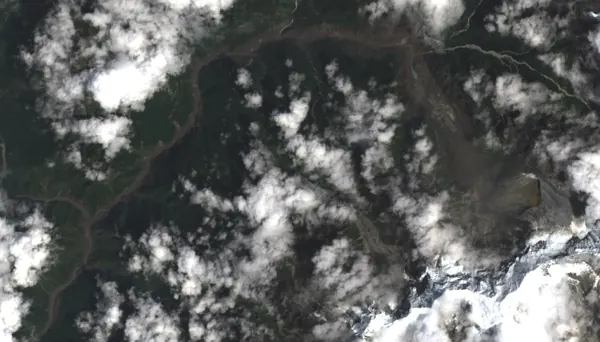
On the morning of 26 August 2026 a huge mass of rock and ice broke away at around 5,000 metres in the Langtang region on the Nepal-Tibet border.
Read more
The US Geological Survey recorded the collapse as seismic energy equivalent to a magnitude 5.2 earthquake, and it remains unclear whether the failure began as a landslide incorporating glacier ice or as a glacial collapse. The debris briefly dammed the Lhende river; when the blockage gave way, a wall of water and rock ran nearly 100km down the Bhote Koshi and Trishuli, reportedly raising the Trishuli by nine metres in half an hour. Rasuwa, Nuwakot and Dhading were worst hit, along with Gyirong county in Tibet. By 2 September Nepali authorities reported at least 1,114 dead and 3,916 missing, with 16 dead and 546 missing on the Chinese side; many of the missing were hydropower workers and foreign trekkers. Damage was estimated above four billion dollars. A similar, smaller outburst had destroyed the Rasuwagadhi border crossing in the same valley in July 2025.
- 20262083 BSSeptember 2026
Counting the cost, and the questions that follow
A week after the flood, Nepal is running its largest relief operation since the 2015 earthquake, and the disaster has become the country's deadliest since then.
Read more
More than 21,000 police, army and armed police personnel have been deployed, over 10,000 people rescued including 252 foreign nationals, and medical treatment given to at least 4,070. A flood emergency has been declared in fifteen municipalities. Access remains the central problem, with the highway from Kathmandu passable only as far as Nuwakot. The UN reports around 65,000 people needing emergency water and sanitation and more than 22,000 children needing protection; 48 suspension bridges are damaged, 28 needing full replacement. Prime Minister Balen Shah has released about 6.5 million dollars and shifted the operation from rescue towards rehabilitation. Two arguments dominate: whether adequate warning could have crossed the border from China in time, an issue already raised after the July 2025 flood in the same valley, and how far a warming Himalaya makes such events more likely. Figures are still moving.
Nepal, explained for Nepalis abroad. The week's news from Nepal, plus guides on citizenship, passports and land, free every Friday.
Subscribe free