

1979 · 2035/36 BS
UNESCO lists the Kathmandu Valley as World Heritage
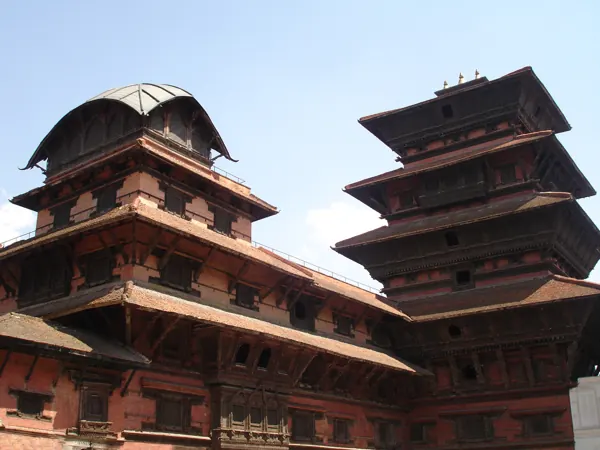
In 1979 UNESCO inscribed the Kathmandu Valley on the World Heritage List. The listing covers seven monument zones: the Durbar Squares of Kathmandu, Patan and Bhaktapur, the Buddhist stupas of Swayambhunath and Boudhanath, and the Hindu temples of Pashupatinath and Changu Narayan. The boundaries were revised in 2006.
Much of what it protects was built or rebuilt under the Malla kings: the palaces and temples of the three Durbar Squares, the Krishna Mandir, the Nyatapola and the Kumari Ghar. Kasthamandap, the wooden pavilion in Kathmandu Durbar Square whose name means "wood-covered shelter", is traditionally dated to 1596 under Lakshmi Narasimha Malla, though excavations after 2015 dated its oldest parts to the seventh century.
From 2003 to 2007 the valley was on UNESCO's list of World Heritage in Danger, over concerns that the monument zones were losing their authentic character. The April 2015 earthquake severely damaged all three Durbar Squares: the Hari Shankar temple in Patan collapsed and Kasthamandap was reduced to rubble.
Source and further reading: Wikipedia
Part of A Timeline of Nepal · Democracy and conflict · all events in this era. Last checked 2026-11-19.