

Ancient Nepal
From the Kirat kings of the chronicles to the Licchavi inscriptions and the Thakuri centuries. Much of the early period is known from tradition and later chronicles rather than records of the time.
- 7 events
- c. 700 BCE – 1200
- The whole timeline
Ancient Nepal
From the Kirat kings of the chronicles to the Licchavi inscriptions and the Thakuri centuries. Much of the early period is known from tradition and later chronicles rather than records of the time.
- 700 BCEc. 700 – 300 BCE
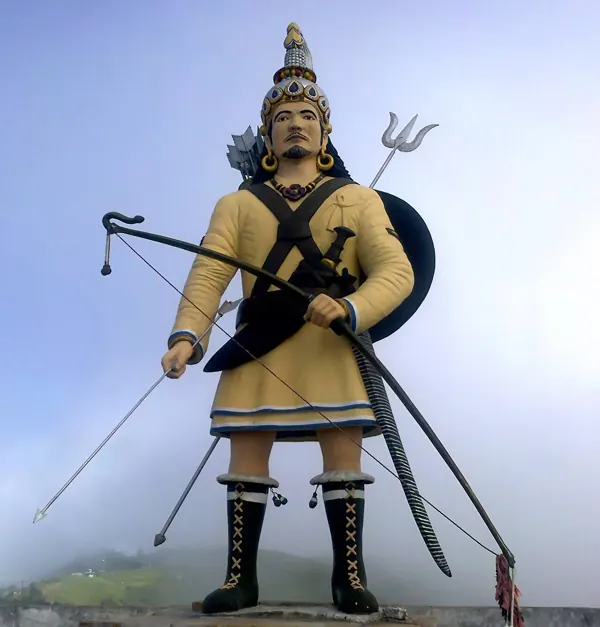
The Kirat kingdom
The Kirats are the earliest rulers named in the chronicles of the Kathmandu Valley, traditionally beginning around the seventh century BCE with the legendary king Yalamber.
Read more
The Nepali chronicles list a long line of Kirat kings, though their dates and even their number vary from one source to another, and almost nothing about the period can be confirmed from inscriptions. What is better attested is that Kirat peoples — the ancestors of today's Rai, Limbu and Sunuwar communities among others — were long established in the eastern hills, and that their descendants still mark this history in festivals such as Sakela and Udhauli-Ubhauli. Historians treat the chronicle king-lists as tradition rather than record, but the Kirat era remains the foundation story of Nepal's own account of itself, and Yalamber appears in the Mahabharata tradition as Barbarik. The period is generally taken to close when the Licchavis established themselves in the valley.
- 563 BCEc. 563 – 483 BCE
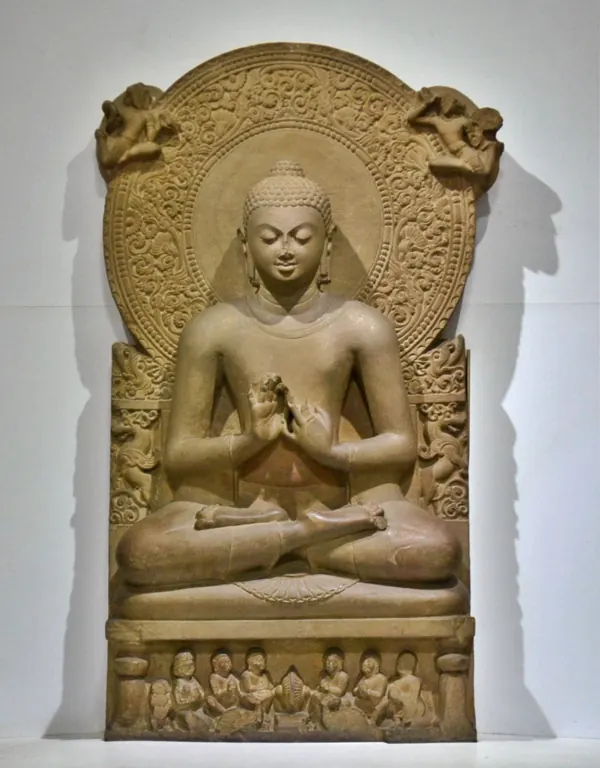
The Buddha is born at Lumbini
Siddhartha Gautama, later known as the Buddha, was born according to Buddhist tradition at Lumbini in the Terai, in what is now Rupandehi district, to a family of the Shakya clan.
Read more
He renounced his household life to live as a wandering ascetic, and after years of mendicancy and meditation attained enlightenment at Bodh Gaya, in present-day India. The religion he founded spread across Asia and became one of the defining influences on Nepali culture, art and architecture. His dates are debated: the traditional reckoning of about 563 to 483 BCE is still widely used, while many modern scholars place his death closer to 400 BCE. Lumbini is today a UNESCO World Heritage Site and one of the four principal pilgrimage places of Buddhism, and the Buddha's birth in Nepal remains a point of national pride, occasionally the subject of public argument with neighbours who claim him as their own.
- 249 BCEc. 249 BCE
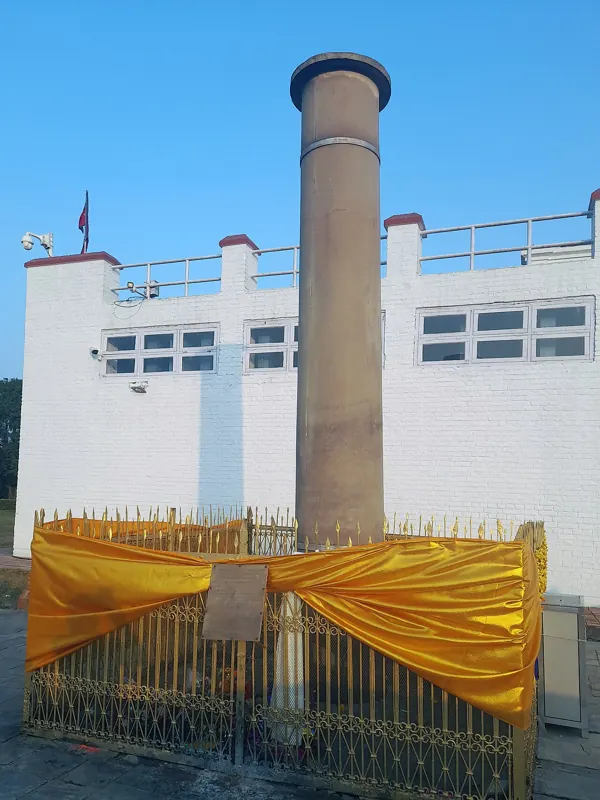
Ashoka's pillar marks the birthplace
The Mauryan emperor Ashoka is recorded as having travelled to Lumbini in the twentieth year after his consecration, a date usually placed at about 249 BCE. To mark the visit he had a polished sandstone pillar erected.
Read more
Its Brahmi inscription, still legible, states that the emperor came in person and worshipped at the spot because the Buddha Shakyamuni was born there, and that he reduced the village's tax obligations in recognition. It is the earliest surviving written evidence identifying Lumbini as the Buddha's birthplace, and among the oldest inscriptions connected with the territory of modern Nepal. The site was later lost to memory and rediscovered in December 1896, when the governor Khadga Shumsher Rana and the archaeologist Alois Anton Führer examined a pillar standing in a mound at Rummindei and found Ashoka's inscription on it. Excavations beneath the Maya Devi temple in 2013 found earlier shrine structures, suggesting worship at the site from a very early date.
- 350c. 350 – 375 CE
Nepal named on the Allahabad pillar
The Allahabad Pillar inscription of the Gupta emperor Samudragupta lists the frontier kingdoms that paid him tribute and sent envoys to his court.
Read more
Among them, in lines 22 to 23, is Nepala — alongside Samatata, Davaka, Kamarupa and Kartripura. It is one of the earliest external references to Nepal by name, and it places the Kathmandu Valley within the diplomatic world of northern India in the fourth century. The inscription describes these as frontier rulers rather than conquered provinces: they paid tribute and made obeisance, but were not absorbed into the empire. For historians, the value of the reference is that it fixes Nepal as a recognised political entity at a date when the local chronicles are still largely legendary. Within a century the Licchavi kings of the valley would begin issuing dated inscriptions of their own, and Nepal's history moves from tradition into documentary record.
- 400c. 400 – 750 CE
The Licchavi era and Nepal's first records
The Licchavi kings ruled the Kathmandu Valley for roughly three and a half centuries, and their reign marks the point at which Nepal's history moves from chronicle into documentary record.
Read more
A stone pillar at the Changu Narayan temple, dated 464 CE and issued in the name of King Manadeva, is generally accepted as the earliest securely dated inscription found in Nepal. Dozens more followed, recording land grants, taxes, guilds, irrigation and the administration of villages. The period's high point is usually associated with Amshuverma, who governed in the early seventh century, built the palace of Kailashkut Bhawan and expanded trade and diplomatic contact with Tibet, India and China. Tibetan tradition holds that a Nepali princess, Bhrikuti, married King Songtsen Gampo and helped carry Buddhism north, though no Nepali source of the period mentions her and historians treat the story with caution. Newar artisans nonetheless worked in Tibet for centuries afterwards.
- 750c. 750 – 1200
The Thakuri period
The centuries between the end of Licchavi rule and the rise of the Mallas are the least documented in Nepal's recorded history, and are usually labelled the Thakuri period after the ruling families said to have held power from Nuwakot and the Kathmandu Valley.
Read more
Inscriptions become scarce, and much of what is written about the era comes from later chronicles of uncertain reliability; some historians question whether the Thakuris constituted a single dynasty at all. The tradition holds that Amshuverma's line gave way to Thakuri rulers, among them Gunakamadeva, credited in the chronicles with founding the city of Kantipur, now Kathmandu. Trade across the Himalaya continued, Buddhist and Hindu institutions were endowed, and the Newar craft traditions that would flower under the Mallas were already being formed. It is a genuine gap in the record rather than a gap in Nepali life, and historians remain cautious about the names and dates handed down for it.
- 10971097 – 1324
The Karnat kings of Mithila
The Karnat or Karnata dynasty was established in 1097 CE by Nanyadeva, with capitals at Simraungadh in what is now Bara district of Nepal and, later, at Darbhanga in Bihar.
Read more
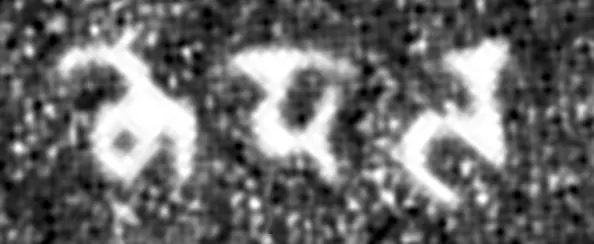
Its territory covered Tirhut or Mithila, bounded by the Mahananda river in the east, the Ganges in the south, the Gandaki in the west and the Himalaya to the north. Under the Karnats, Mithila enjoyed near-complete sovereignty for more than two centuries, and the period is associated with a flowering of Maithili language, literature and Sanskrit scholarship, as well as the Tirhuta script in which its inscriptions were cut. The dynasty fell in 1324 to the forces of Ghiyasuddin Tughlaq of Delhi, and its last ruler Harisimhadeva fled north into the hills. The Karnat period is a reminder that the history of the Nepali plains has its own long trajectory, distinct from that of the Kathmandu Valley, and it remains central to Madhesi and Maithil accounts of the region's past.
Nepal, explained for Nepalis abroad. The week's news from Nepal, plus guides on citizenship, passports and land, free every Friday.
Subscribe free