

c. 249 BCE
Ashoka's pillar marks the birthplace
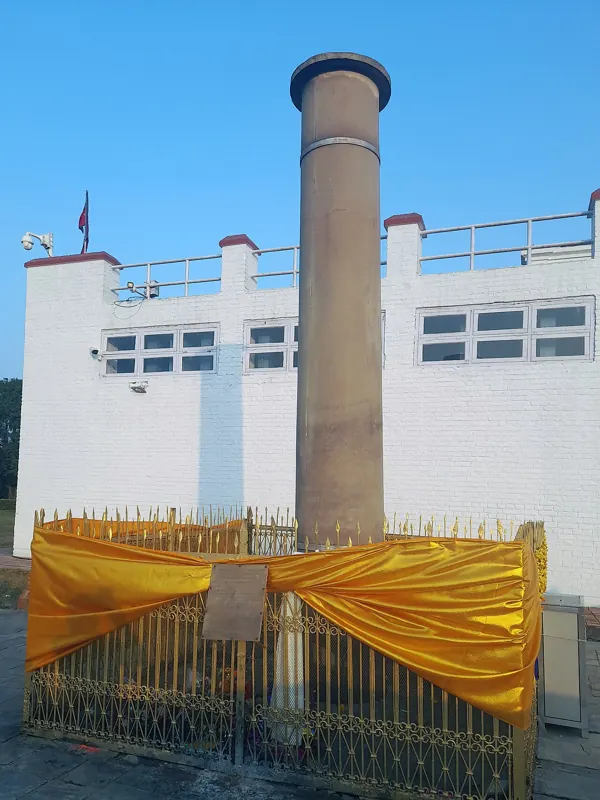
The Mauryan emperor Ashoka is recorded as having travelled to Lumbini in the twentieth year after his consecration, a date usually placed at about 249 BCE. To mark the visit he had a polished sandstone pillar erected. Its Brahmi inscription, still legible, states that the emperor came in person and worshipped at the spot because the Buddha Shakyamuni was born there, and that he reduced the village's tax obligations in recognition. It is the earliest surviving written evidence identifying Lumbini as the Buddha's birthplace, and among the oldest inscriptions connected with the territory of modern Nepal. The site was later lost to memory and rediscovered in December 1896, when the governor Khadga Shumsher Rana and the archaeologist Alois Anton Führer examined a pillar standing in a mound at Rummindei and found Ashoka's inscription on it. Excavations beneath the Maya Devi temple in 2013 found earlier shrine structures, suggesting worship at the site from a very early date.
Source and further reading: Wikipedia
Part of A Timeline of Nepal · Ancient Nepal · all events in this era. Last checked 2026-09-03.