

September 2015 – February 2016 · 2072 BS
The border blockade
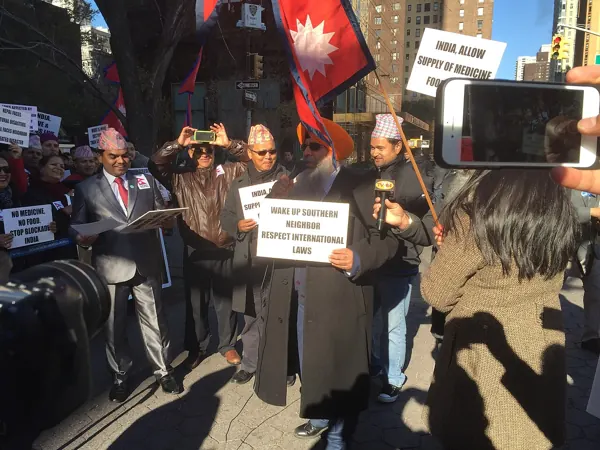
Within days of the constitution's promulgation, freight movement across Nepal's main southern border crossings largely stopped. Madhesi parties maintained sit-ins at the crossings; Nepal's government and much of its public accused India of enforcing an undeclared blockade in support of those demands, pointing to lorries held back on the Indian side. Delhi denied imposing any blockade, attributing the stoppage to Nepali protests and security concerns. The effect on a landlocked country still recovering from the earthquake was severe: petrol and cooking gas rationing, grounded flights, closed schools and factories, shortages of medicines and vaccines, and a black market in fuel. Losses were widely estimated at around a billion dollars. Nepal signed transit and petroleum agreements with China during the crisis, a shift many analysts saw as lasting. Parliament passed a first constitutional amendment on representation and delimitation in January 2016, and the Madhesi front withdrew its border obstruction on 8 February 2016, though its wider agitation continued.
Source and further reading: Wikipedia
Part of A Timeline of Nepal · The republic and today · all events in this era. Last checked 2026-09-03.