

1846 – 1951 · 1903 BS
The Kot massacre and a century of Rana rule
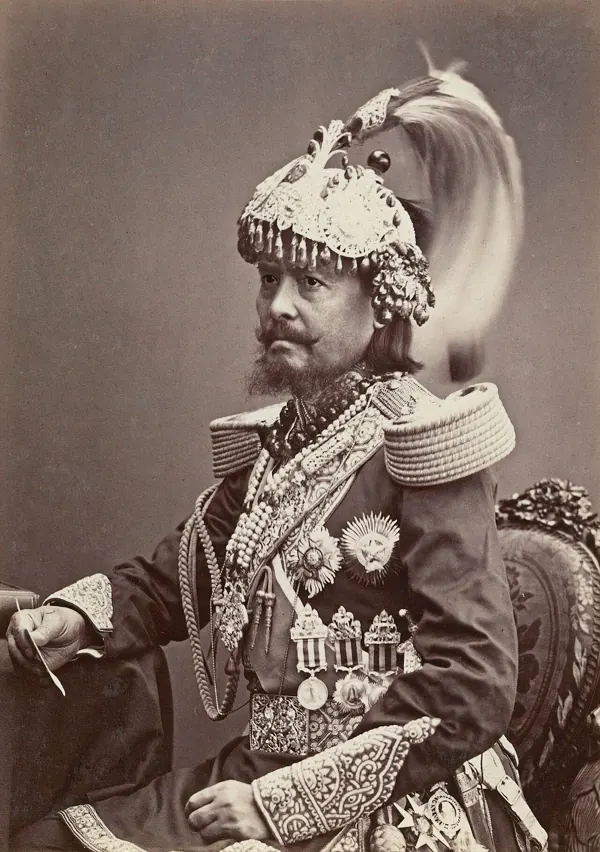
On the night of 14 September 1846, after the murder of General Gagan Singh Bhandari, Queen Rajya Lakshmi Devi summoned the court to the Kot, an armoury courtyard beside the palace, and demanded the culprits be named. Accounts differ, but fighting broke out and dozens of nobles were killed, among them the prime minister Fateh Jung Shah. Jung Bahadur Kunwar, who commanded troops at the scene, emerged in control, became prime minister within days, took the title Rana and secured hereditary powers that reduced the Shah kings to figureheads for the next 104 years. Historians disagree over how far the killings were planned and by whom. Under the Ranas Nepal stayed independent but largely closed: little schooling, almost no roads or industry, no political parties and no press, alongside enormous palaces built in Kathmandu. Their rule ended in 1951. The period is remembered for that isolation, and for the diplomatic achievements — the 1923 treaty, the abolition of slavery — that came with it.
Source and further reading: Wikipedia
Part of A Timeline of Nepal · Unification and Rana rule · all events in this era. Last checked 2026-09-03.