

1990s onwards · 2046/47 BS
Foreign employment reshapes Nepal
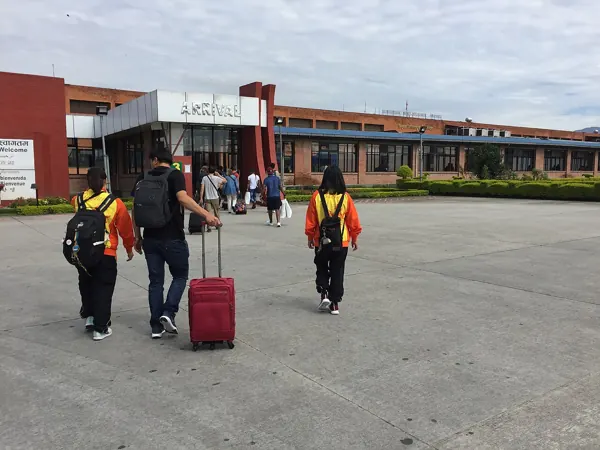
Nepalis have long worked abroad — in Indian cities, in the Gurkha regiments, in the tea gardens of Darjeeling. From the 1990s the scale and direction changed. Rules were liberalised, air links improved and recruitment agencies multiplied, and hundreds of thousands began leaving each year for Malaysia, Qatar, Saudi Arabia, the UAE and Kuwait, alongside the continuing open-border movement into India and smaller flows to Britain, Japan, Korea and Australia. Remittances grew from a marginal item into the mainstay of the economy, reaching roughly 6.7 billion US dollars by 2015 and around a quarter of national income by the 2020s, among the highest shares in the world. That money paid for food, housing, schooling and healthcare and cut measured poverty sharply. The cost has been heavy: workers routinely borrowed at high interest to pay recruitment fees, arrived to find contracts substituted, and worked in extreme heat with limited protection. Deaths abroad became a recurring subject of parliamentary and press scrutiny, and long separations reshaped families and left villages with few working-age adults.
Source and further reading: migrationpolicy.org
Part of A Timeline of Nepal · Democracy and conflict · all events in this era. Last checked 2026-09-03.