

21 November 2006 · 2063 BS
The Comprehensive Peace Accord
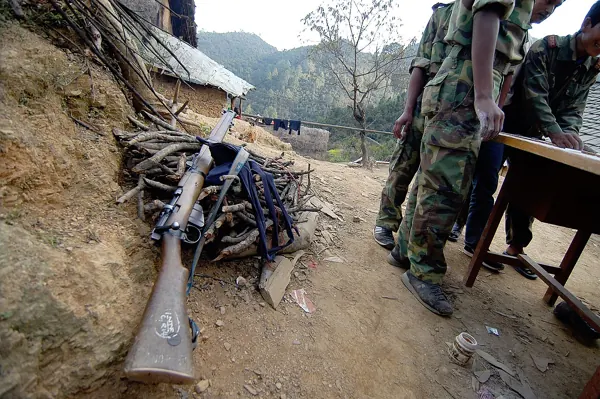
On 21 November 2006 Prime Minister Girija Prasad Koirala and the Maoist chairman Pushpa Kamal Dahal, known as Prachanda, signed the Comprehensive Peace Accord in Kathmandu, formally ending the armed conflict begun in 1996. Both sides ended armed mobilisation and recruitment. Maoist combatants moved into temporary cantonments with their weapons stored under United Nations monitoring, matched by the locking away of an equivalent number of Nepal Army weapons. The parties committed to elections for a constituent assembly, to a commission on state restructuring, to a truth and reconciliation commission, to accounting for the disappeared and to ending the King's political role. Implementation proved slow and contested: the integration of former combatants took until 2012, and transitional justice remained largely unfinished nearly two decades later — a continuing grievance for victims' families on all sides. Amendments to the transitional justice laws were finally passed in 2024, and their effect is still being argued over.
Source and further reading: Wikipedia
Part of A Timeline of Nepal · Democracy and conflict · all events in this era. Last checked 2026-09-03.